Disaster Recovery and Backup Strategies for Web3 Credential Systems
 Author:
 Reading time:
12 min
Reading time:
12 min
 Difficulty:
Easy
Difficulty:
Easy
Have you ever stopped to think about just how fragile your digital history actually is? The truth is actually pretty unsettling. Most universities still house hard-earned student records in centralized databases . These systems store and manage every record in one single, central location. It’s the digital version of putting all your eggs into one solitary basket.
We face constant digital threats every single day. Think about ransomware attacks . This nasty software blocks your computer access until you pay up. Sudden hardware crashes also pose a massive risk. These problems can paralyze an entire institution for weeks on end. Relying on a single point of failure like this is just too risky. If that one part fails, the entire system stops. You simply can't justify taking that kind of risk anymore.
This is where Web3 steps in. We need stronger disaster recovery strategies for Web3 credential systems. Think of this approach-which often involves Web3 API integration-as a smart, strategic move. It fixes the built-in flaws found in old-school IT infrastructures.
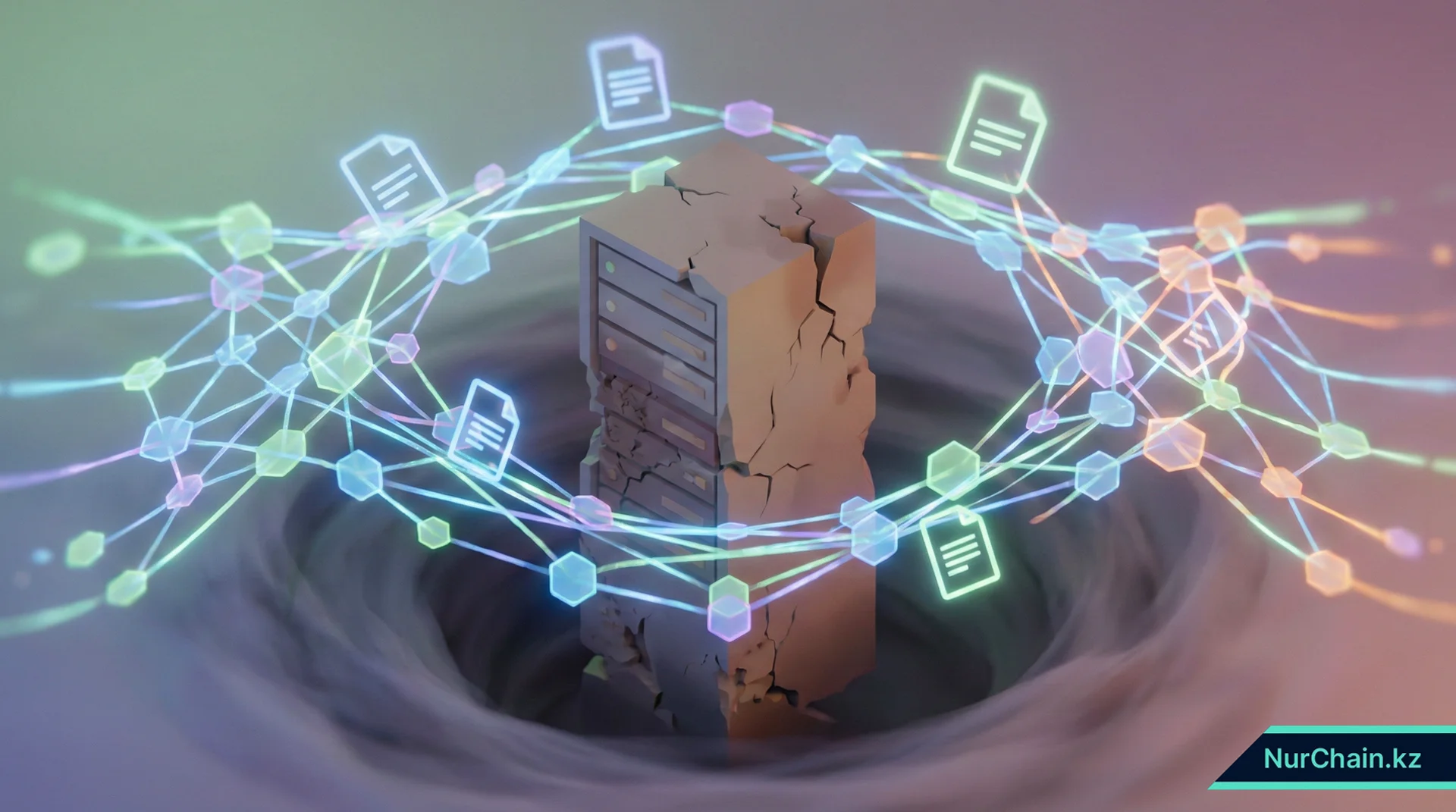
So, what does it actually do? It builds a distributed system . This network uses different computers that coordinate by passing messages. It works just like a global safety net. It keeps student data safe, accessible, and totally tamper-proof. Schools can finally move away from those restrictive "digital walls." By moving to a decentralized future, they protect themselves from massive financial losses . They also dodge the nightmare of administrative chaos.
This guide shows you how blockchain acts as the ultimate fail-safe. This technology works as a powerful distributed ledger. We'll also dive into decentralized storage like IPFS . That stands for the InterPlanetary File System. This protocol and peer-to-peer network shares data in a distributed way. It’s a total game-changer for data resilience. Finally, you'll see how these tools protect you. They ensure your academic achievements always stay with you. They stay safe even if a school happens to close its doors for good.
🛡️ Mastering disaster recovery is the final structural safeguard in our Technical Guide for NFT Diplomas, ensuring that decentralized infrastructure remains resilient against any institutional or digital crisis.
Why Blockchain Serves as the Ultimate Fail-Safe for Student Records
Have you ever stopped to think about how fragile our digital history really is? Why are traditional university databases so vulnerable to ransomware (malicious software that blocks your system until you pay up)? It’s unsettling to realize that most universities still store student records in centralized databases. This approach puts all your eggs in one basket, creating a dangerous single point of failure (a part of a system that stops everything if it fails). If a university’s local servers crash or get hit by a nasty ransomware attack, the results are paralyzing. Data from the IBM Security " Cost of a Data Breach Report " shows it takes an average of 24 days for an institution to recover, leaving students and faculty stuck in limbo.
The financial side is just as stressful. By 2025, the average cost of an education data breach climbed to $3.80 million. Why is it so expensive? These breaches expose sensitive personal info, and cleaning up the mess-legal fees, notifications, and monitoring-costs between $160 and $178 per record. That's a massive financial hit many schools aren't ready for, especially if they ignore lower data breach mitigation costs (expenses to reduce the impact of a security incident) offered by modern tech. How does blockchain reduce the cost of a data breach? By automating recovery and cutting out manual audits, the savings become obvious .
This is where a Web3 credential system changes everything. Instead of giving hackers a central target, it uses a distributed ledger architecture (where data is shared and synced across multiple sites or institutions). Imagine a record mirrored across hundreds or even thousands of independent computers simultaneously. Even if a university's entire IT system goes offline, your student data stays safe and accessible elsewhere. Native geo-redundancy (storing data in multiple locations to protect against regional disasters) sits right at the heart of the blockchain. You would likely pay up to 70% more in data transfer fees to get this same safety with traditional cloud providers. Implementing geo-redundancy in blockchain systems ensures no single disaster can wipe out a generation's achievements. On the flip side, blockchain solutions cut technical overhead (the ongoing maintenance costs of running a system) by about 78% compared to old-school backup systems. How does blockchain prevent data loss in schools? It ensures every node in the network holds a verifiable copy of the truth, creating the gold standard for blockchain backup strategies.
Perhaps the best part is that blockchain offers immutability (the quality of being unchangeable over time). In a disaster, your "backup" isn't just a copy that might be corrupted; it's a verified original. Blockchain immutability in record keeping means that even if a server is compromised, the ledger remains untainted. This is a huge deal, especially since 46% of ransomware victims who get their data back find the files were ruined during the attack. With blockchain, what you save is exactly what you get back, providing ransomware protection for universities that legacy IT simply cannot match.
Did You Know? The strength of a decentralized system comes from "herd immunity." Because no single person or group controls all the data, there is no "master switch" for a hacker to flip. This makes your academic records nearly impossible to erase or hold for ransom.

Strengthening Data Resilience with IPFS and Decentralized Storage
Storing massive, high-resolution diploma files directly on a blockchain is simply too expensive. So, what are the benefits of IPFS (InterPlanetary File System) for storing diplomas? It allows you to facilitate decentralized academic data storage without the crushing gas fees of on-chain storage. To build a backup plan that actually works, forward-thinking schools use the InterPlanetary File System (IPFS)-a peer-to-peer network for storing and sharing data in a distributed system. This tech stores the actual documents and details, and it's a major reason why the Blockchain in EduTech market is set to hit $22.31 billion by 2035.
How does it work? IPFS uses content-based addressing , identifying files by a unique digital "fingerprint" rather than a specific server location. Instead of hunting for a file based on where it lives-like a web link that eventually breaks-it finds the file based on what it is. This ensures your records stay reachable even if a university’s main website crashes. This decentralized approach offers a massive 99.2% uptime , easily beating the 96.5% average of traditional web setups. Why is decentralized storage safer than cloud backups? Unlike a cloud provider that might suffer a localized outage, a distributed ledger technology (DLT) environment spreads the load globally across a vast peer-to-peer (P2P) network .
Recent research shows that switching to a decentralized IPFS setup cuts server failure rates by about 35%. That's a total lifesaver during major internet outages or targeted attacks. By using the blockchain as a secure "anchor" for the technical process of minting NFT diplomas and IPFS for academic document storage , we create a permanent, tamper-proof audit trail. This model delivers 100% success when validating records online via a dedicated subdomain and a solid 92% success rate in offline verification . For you, this means students can still prove their credentials even during a regional internet blackout.
This system also protects you against the "inside job." It breaks data into encrypted pieces and spreads them across the network through encryption and sharding . This means no single person-as long as you use defined user access roles-can delete or change a student’s record, not even a disgruntled employee. Insider breaches often cost an average of $4.92 million to fix, making this extra layer of security vital for any modern campus. By building a framework that stops digital forgeries and credential verification issues, schools can finally trust their data again.
Quick Insight: Think of IPFS like a global library where every book has a permanent, unique ID. Even if the library's front door is locked, you can find that same book through any other branch in the network instantly.

How Web3 Future-Proofs Academic Continuity During Institutional Crisis
Have you ever worried about what happens to your degree if your university shuts its doors? What happens to my digital degree if my university closes? It’s a valid concern, but Web3 provides an answer through the Self-Sovereign Identity (SSI) model (a digital identity approach that gives individuals full control over their personal data). This approach puts you, the student, in the driver’s seat as the "data owner." This shift is a major part of why the digital identity market is growing so fast within the $1.4 trillion blockchain forecast for 2030. By standardizing student data and following official standards for Verifiable Credentials (digitally signed, tamper-proof academic records), these decentralized records ensure that your achievements stay portable and recognized, no matter what happens to the school itself. This level of academic continuity in institutional crisis is precisely what disaster recovery for Web3 credentials was designed to solve.
In a traditional setup, getting a transcript verified becomes a total nightmare if a school closes because of financial issues or conflict. However, blockchain-based credentials stay permanently verifiable even if there is no registrar's office (the department responsible for maintaining student records) left to answer the phone. How can students control their own academic records with SSI? By using self-sovereign identity (SSI) for education, you hold your own keys to your data-highlighting the importance of securely managing private blockchain keys-making digital identity portable records a reality. This marks a massive win against the $22 billion global fake diploma market , where digital forgeries (fraudulent copies of documents) unfortunately spiked by 244% just last year.
These decentralized systems allow for instant digital checks. We're talking about cutting the time it takes to verify a "backed-up" credential from the usual 7–21 days of phone calls and emails down to less than 5 seconds . That is a 98% improvement in efficiency that helps both the employer and the graduate, significantly aiding in verifiable credentials disaster recovery. This level of registrar office automation means that human error and administrative delays-minimized by thorough QA testing before mass issuance-become things of the past.
Top-tier schools like MIT and Harvard already lead the way, using these methods to help students build "lifelong learning" portfolios (collections of records showing a person's skills and achievements over time). These records live on independently of any single software company or university office. It is a trend that employers clearly love; trust levels for blockchain credentials, which include clear protocols on how to handle retractions and corrections, are currently 75% higher than for traditional paper or PDF versions.
Institutions use smart contracts (self-executing programs stored on a blockchain that automatically run when predetermined conditions are met) to manage security and data access, ensuring privacy stays protected even during a disaster recovery phase. Code controls the access, not people. This helps schools avoid the $5.01 million average cost linked to data breaches that take a long time to fix. At the end of the day, it is not just about backing up data; it is about making sure your hard work and your future stay secure and accessible, no matter what life throws at you.
Why It Matters: Your education is a lifelong achievement, and the proof of that work shouldn't depend on a single server or a specific office staying open. Moving to Web3 means your accomplishments are literally etched into a global, permanent record that you-and only you-control.

Summary: Securing a Lifetime of Achievement Through Decentralized Resilience
Why does shifting to Web3 actually matter for academic records? Traditional systems are now a liability. They leave institutions wide open to expensive ransomware attacks. You also face the nightmare of losing vital data forever.
You can finally eliminate that "single point of failure" haunting older, legacy databases. Universities do this by embracing blockchain backup strategies for student records . This move isn't just about adding extra security. It represents a fundamental shift toward two key concepts.
The first is native geo-redundancy . This means spreading mission-critical infrastructure across multiple global data centers. The second is immutability , or the quality of being unchangeable over time. Here’s what that means in plain English: even if a server crashes, your records stay safe. A verified original stays synced across a global network during any disaster.
The real magic happens when you combine these strategies. You can use decentralized academic data storage like IPFS. Since placing huge files directly on the blockchain is often slow and expensive, IPFS acts like a high-uptime library. It keeps diplomas accessible even if a university’s main website goes dark.
Now, add Self-Sovereign Identity (SSI) to the mix. This model gives individuals full ownership of their digital identities. When you use this, the power shifts right back to the student. This ensures academic continuity in institutional crisis .
Your hard-earned credentials stay under your personal control. They remain permanently verifiable at all times, whether or not a registrar's office is there to help. You can also use smart contracts for data access . These are self-executing contracts with terms written directly into lines of code.
These systems create audit trails that no one can mess with. Because of this, Web3 systems cut verification times significantly. They turn a process of weeks into just a few seconds. Ultimately, this provides a high level of trust. Paper certificates and PDFs simply cannot match it. This isn't just a backup plan. It’s a future-proof foundation for a global, portable digital identity . Your records stay completely unshakeable.
🚀 Ready to go live? Now that you've built a bulletproof recovery and backup strategy, you must ensure the entire system functions flawlessly under pressure. Proceed to Quality Assurance (QA) Testing to verify your setup before you issue that first batch of diplomas.
