How to Share Your NFT Diploma with Foreign Universities
 Author:
 Reading time:
15 min
Reading time:
15 min
 Difficulty:
Easy
Difficulty:
Easy
- Step-by-Step: Sharing Your NFT Diploma via Digital Wallets
- Why Foreign Universities Trust Your NFT Diploma Over Traditional PDF Transcripts
- How to Ensure Your NFT Diploma Meets International Admission Requirements
- Troubleshooting Common Challenges in International Digital Credential Sharing
- Summary: Streamlining Your Global Future Through Blockchain Credentials
Have you ever worried that your hard-earned degree might get lost in the mail? Or worse, would a foreign university dismiss it because they can't verify it quickly? It’s a stressful thought, especially when your international career or master’s degree is on the line. The traditional way of doing things is slow and outdated, which is why understanding the differences between digital vs paper diplomas is essential for today's graduates. What if you could prove your qualifications instantly? Imagine doing that without weeks of waiting or those expensive courier fees.
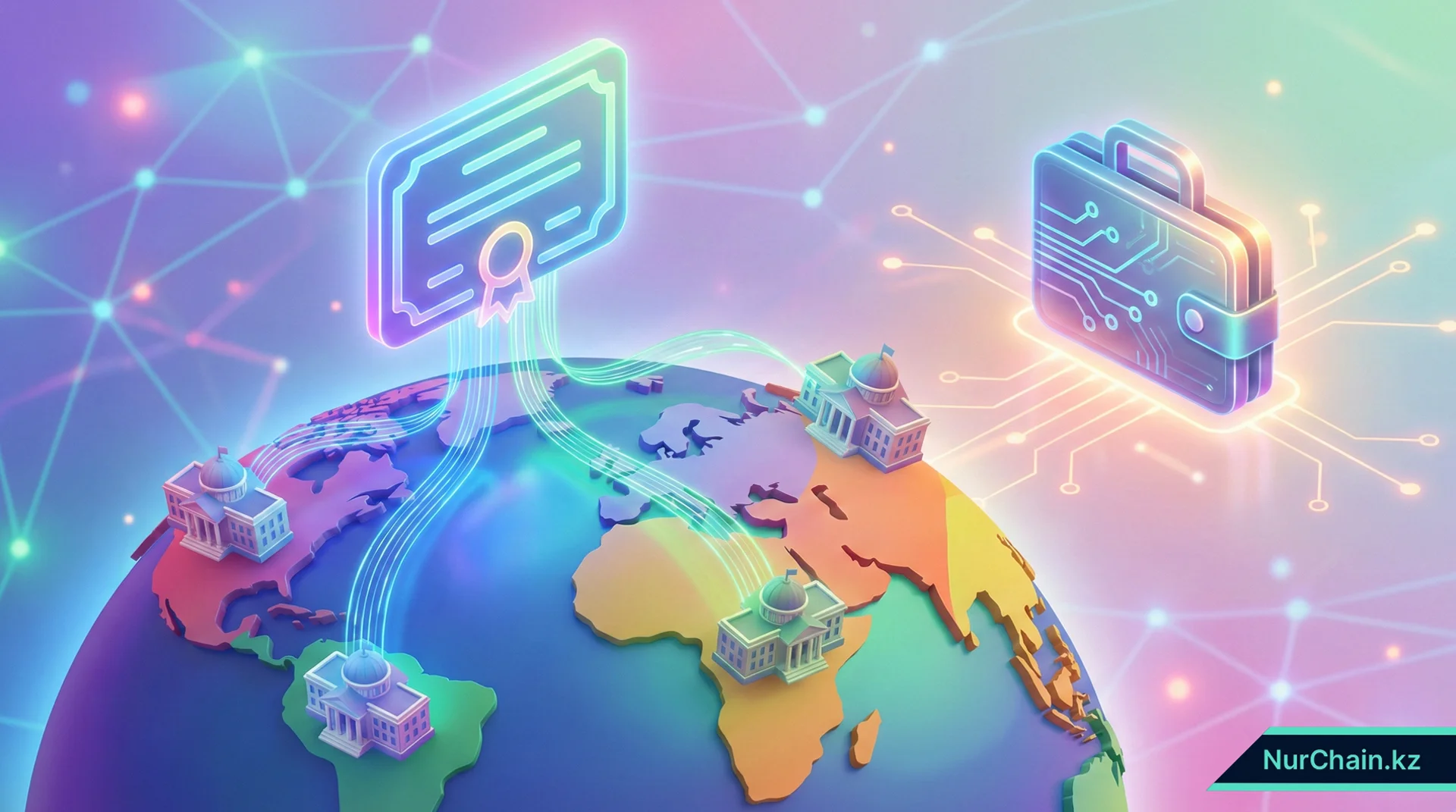
This is exactly where the power of an NFT diploma changes the game. In simple terms, this is a unique digital certificate representing your degree on a blockchain-one you can easily add to your LinkedIn profile to boost your professional visibility. You can think of a blockchain as a decentralized and secure digital ledger. Moving to a digital wallet for academic certificates isn’t just about following a trend. These are specialized apps for storing and managing digital credentials. It’s actually a smart, strategic solution. It turns your achievements into a portable, unhackable briefcase of proof-offering true ownership of your credentials-that you carry everywhere. In this guide, we’ll walk you through the simple steps. You'll learn how to share your NFT diploma with foreign universities . We'll also explain why admissions officers are starting to prefer blockchain over traditional PDFs. Finally, we'll show you how to navigate international legal standards like eIDAS 2.0 (the updated European Union regulation for electronic identification and trust services). We'll make sure your application is accepted without a hitch.
🧭 Mastering the logistics of international credential sharing is a key component of the strategic framework found in the Student Guide to Managing NFT Diplomas.
Step-by-Step: Sharing Your NFT Diploma via Digital Wallets
You've finally crossed the finish line and claimed your NFT diploma after graduation. Instead of just holding a heavy frame and a piece of paper, you’ve earned a cutting-edge NFT diploma . But how do you get that digital proof into the hands of an admissions officer half a world away? If you're wondering, "How do I send my NFT diploma to a university?" you're asking the right question for the digital age. This process lets you share your NFT diploma with foreign universities as easily as sending a text, but with the security of a high-tech vault. It’s actually easier than you might think. Think of your digital wallet as an unhackable briefcase for your hard-earned achievements. "The transition to digital credentials is a fundamental shift in how we value and verify human potential," notes education technology expert Dr. Philippa Hardman.
First, you'll need to access your Digital Wallet . Whether you use Blockcerts , VIDwallet , or a specific app-and knowing how to recover your NFT diploma is essential-this digital space is where your diploma lives as a Verifiable Credential (VC). Essentially, using a digital wallet for academic certificates turns your smartphone into a portable, verified transcript office you carry everywhere. You’re in good company; as of 2025, 62% of students prefer digital wallets for their sheer convenience. You might ask, "What digital wallets are used for academic certificates?" The answer depends on your institution's platform and international standards. A recent Gartner report suggests that by 2026, 25% of people will spend an hour a day in the metaverse, cementing the role of digital assets in our professional lives.
Once you're in, your next move is to generate a secure sharing link . When sharing NFT certificates with admissions officers , you aren't just sending a file; you're providing cryptographically signed proof of your hard work. Look for a "Share" or "Public Link" option within your wallet to proceed. This action creates a unique URL that points directly to your record on a decentralized ledger like Polygon or the European Blockchain Services Infrastructure (EBSI) . This isn't just a niche trend-EBSI already supports over 370 trusted issuers across Europe. This is the backbone of verifiable credentials in education , creating a world where your achievements are instantly recognized across borders.
If you’re applying through a traditional portal that asks for a PDF, don’t worry. You can use QR codes for fast access. For recruiters on the go, QR Code Authentication provides a seamless way to scan and verify your degree on the spot. By downloading a version of your diploma with an embedded QR code, you help the university skip the long wait. Instead of the old-school verification wait time of 3–14 days, an admissions officer can validate your entire record in less than 60 seconds . Many systems now use Digital Trust Anchors to ensure the source of your data is beyond reproach from the moment it’s scanned.
For the privacy-conscious, you can even grant selective disclosure . Is it possible to stay private while still being official? Absolutely. You might wonder, can I share only specific parts of my NFT degree? if you only want to prove a specific major. By using Selective Disclosure , you can choose to share only the essentials while keeping the rest of your data under wraps. This technology relies on W3C Standards to ensure your data is readable by any compliant system worldwide. It is a key part of the eIDAS 2.0 digital identity framework , which prioritizes your privacy and cross-border compatibility. Finally, many of us will submit via international networks like Parchment or My eQuals . These platforms have already exchanged over 165 million credentials across 135 countries, connecting you to over 6,100 higher education institutions worldwide.
Try This: Before you send your link to a university, try opening it in an "Incognito" or "Private" browser window. This lets you see exactly what the admissions officer will see and ensures your link is working perfectly before that big deadline.

Why Foreign Universities Trust Your NFT Diploma Over Traditional PDF Transcripts
Why can't you just email a PDF? In the eyes of a university, a PDF is just a picture that any student can edit with a few clicks. An NFT diploma, however, is a different beast entirely. It is built on mathematically proven trust , which is why institutions are rushing to adopt this tech. How do universities verify blockchain diplomas? The answer lies in the way the chain indexes and secures data. By 2026, a staggering 99% of schools expect to lean on this technology to handle the growing administrative and budgetary pressures they face.
Your biggest win here is instant cryptographic verification . Through blockchain diploma verification, the receiving institution can cross-reference your credential with the university's public signature in real-time. By using decentralized identifiers (DIDs), universities no longer have to call your old registrar to make sure you actually graduated. This blockchain based degree verification bypasses the need for manual, slow-moving registrar offices entirely. It serves as a massive shield against document forgery. The system provides robust Document Forgery Prevention because the ledger cannot be tampered with or altered by unauthorized parties. With reports suggesting that up to 40% of applicants might misrepresent their qualifications, the immutability of the blockchain is a lifesaver. This level of Cryptographic Verification is what makes the process so secure for high-stakes admissions. It directly responds to the $22 billion global counterfeit diploma market that has plagued higher education for years. Research from the Association of Certified Fraud Examiners (ACFE) highlights that educational credentials are among the most frequently falsified documents-a problem blockchain specifically solves through timestamped, unalterable ledger entries.
When you submit an NFT, you provide a proven source of truth . Behind the scenes, smart contracts automate the validation process, triggering instant confirmation if a document is authentic. Major names like MIT and Harvard already recognize these assets because they provide an unbreakable link to the school’s digital signature. This moves the trust anchor away from easily faked paper and onto a secure cryptographic key . Because it relies on Decentralized Ledger Technology (DLT), there is no single point of failure or central database to hack.
There is also a huge practical side: it leads to a 90% reduction in administrative costs . The immutability of the record means that once it is written, it stays there forever, untouched and ready for reuse. Universities are feeling the pinch, with 44% of institutions reporting that managing fragmented documents and payment systems is driving their costs up. Automation solves this. Plus, you get the benefit of permanent availability . Since your diploma is on a decentralized ledger, it stays safe even if something happens to your university's physical archives. It is a smart move in a global digital education market that is projected to hit $133 billion by 2030.
Did You Know? Traditional verification can cost a university dozens of man-hours per week. By sending an NFT diploma, you make yourself the easiest candidate to process , which never hurts your chances with a busy admissions team!

How to Ensure Your NFT Diploma Meets International Admission Requirements
Owning the technology is one thing, but ensuring it clears legal hurdles in a foreign country is another challenge entirely. If you want your application to sail through, you must play by the local rules of your destination. Securing digital academic credentials for international admissions is quickly becoming the standard for global mobility.
Start by checking for regional standards. You might ask, "Are NFT diplomas legally recognized internationally?" and the answer is increasingly "yes" as frameworks evolve. If you're heading to Europe, your diploma must align with the European Digital Identity Framework (eIDAS 2.0) . This is a big deal: by December 2026, all EU Member States must provide a digital identity wallet to their residents. Staying ahead of this curve makes your application look incredibly professional.
In some countries, you may need to combine your tech with official recognition services. For instance, an electronic apostille for digital diplomas is a reality in many jurisdictions today, which makes cross-border legal checks much faster. If you're eyeing a move to Italy, using the CIMEA digital platform can link your blockchain diploma to an official Statement of Verification. Confused about the terminology? You might ask, "What is an e-Apostille for digital documents?"-it's simply the digital version of a legal notarization for foreign use. This bridge connects the world of decentralized tech to national legal systems. You also need to maintain translation accuracy. This ensures academic credential interoperability , which lets different countries recognize each other's digital records without friction. While your degree data is unchangeable, your digital translations should be tied to your blockchain address to ensure the "Verification of Equivalent Level of Education" stays consistent across languages.
Finally, don't forget to verify "Apostille" requirements. Using decentralized identifiers for students ensures your identity is yours to own and manage throughout this legal process. The good news? The Hague Convention now supports e-Apostilles. If your school attaches one to your blockchain record, your NFT becomes legally recognized in over 120 member countries. Platforms like EBSI are leading the charge in creating a unified digital space for these credentials. It's the perfect way to keep a digital-first workflow while satisfying the most traditional legal requirements. At its core, this technology is about Data Sovereignty , giving you full ownership over your personal educational history. The implementation of the e-APP ensures that cross-border recognition remains seamless, with over 40 states already active in the program.
Quick Insight: Always check the "International Admissions" page of your target university for keywords like "digital third-party verification." If they mention platforms like Parchment or Digitary, your NFT-based credential is likely already compatible with their workflow.

Troubleshooting Common Challenges in International Digital Credential Sharing
Even the best tech can hit a snag. You'll occasionally run into a "walled garden"-systems that are behind the times or only accept specific file types. For example, if you're using Blockcerts , keep your app updated to prevent sync issues with older portals. Don't panic if a university uses a platform like Uni-Assist that doesn't "speak" blockchain yet. You can address 'walled garden' systems by uploading a PDF snapshot of your diploma that includes a verification URL in the footer. This gives the recipient a direct "bridge" to the blockchain explorer for 100% certainty.
Another common hurdle involves troubleshooting common NFT diploma issues, specifically managing wallet interoperability . One of the most frequent questions we hear is, " How to troubleshoot broken blockchain diploma links? " which usually comes down to a simple setting error or a compatibility glitch. If a school says they can't "read" your NFT, use interoperable platforms like Digitary or BCdiploma to generate a browser-friendly version. Successfully managing wallet interoperability means choosing tools that follow open standards and talk to other institutional systems. This is a big deal, as 34% of education leaders call interoperability a major barrier to going fully digital.
You also need to be careful about dealing with expired access. You also need to understand Public and Private Keys (cryptographic tools where the public key is shared for verification and the private key is kept secret for security); think of your private key as the secret password you never share, while the public key helps others verify your link. Keep in mind that some sharing links are temporary. Since admissions reviews can take months, you must ensure your sharing link is set to "Permanent." If a link expires before a decision is made, it could put your whole application at risk. Use a tool like Etherscan to verify that your metadata visibility is active.
Lastly, always confirm your metadata visibility before you send your final application. Issues with Metadata Visibility can make an authentic document look "empty" or incomplete to a receiver who isn't familiar with the tech. Before you hit submit, use a public node (a computer that connects to the blockchain network) to check that your institutional accreditation and degree level are correctly indexed. This ensures that the university’s automated systems can "scrape" and verify your data without a human needing to step in and fix things manually.
Why It Matters: A "broken" link is the digital equivalent of a lost envelope. Taking five minutes to double-check your metadata and link permanence can be the difference between a smooth admission and a rejected application due to "missing documentation."

Summary: Streamlining Your Global Future Through Blockchain Credentials
Look at the big picture: things are moving fast. Shifting from paper certificates to NFT diplomas marks a massive leap forward. It’s the perfect move if you want to study or work abroad. We've seen how the entire process has been completely reimagined. Sharing NFT diplomas with foreign universities is now a seamless, user-friendly experience. You can use digital wallets for academic certificates like Blockcerts or VIDwallet. Because of this, you no longer have to wait around for someone else to verify your records. Instead, you own your Verifiable Credentials. These are digitally signed proofs that anyone can authenticate instantly.
You might generate a secure link for an application. Perhaps you use QR code authentication for a sixty-second verification. This method confirms a document's validity the moment you scan the code. You might even choose exactly what info to share to protect your privacy. Whatever the case, this tech puts you in the driver's seat. At the same time, it meets every strict demand from international admissions offices.
The bottom line? These tools create a new era of "digital trust." We are moving away from PDFs that people easily forge. Instead, we are moving toward blockchain diploma verification . By using blockchain to confirm a degree's authenticity, universities help wipe out the counterfeit diploma market. They also cut their boring paperwork by up to 90%. This isn’t just a win for schools; it’s a massive win for you. It tears down the bureaucratic "walls" that usually slow down international applications.
Plus, standards like eIDAS 2.0 are becoming the norm. So is the Electronic Apostille Programme (e-APP) . This global digital service legalizes your documents for use abroad. Your digital achievements now carry the same legal weight as a notarized paper document. This applies in over 120 countries. Once you get the hang of these digital tools, you’re set. You will also know how to handle small hurdles like wallet compatibility. Your hard work remains a permanent, verifiable, and truly portable asset. It can open doors for you anywhere in the world.
🚀 Ready to boost your career? Now that you know how to navigate university admissions, make sure your professional network sees your success. Learn how to add your NFT diploma to your LinkedIn profile to showcase your verified achievements to global recruiters.
