How Universities Should Securely Manage Private Blockchain Keys
 Author:
 Reading time:
13 min
Reading time:
13 min
 Difficulty:
Easy
Difficulty:
Easy
- Why Root Key Protection Is the Foundation of Academic Integrity
- Implementing Multi-Signature (Multi-Sig) Governance for Rectors
- Best Practices for Physical and Digital Key Storage
- Establishing a Key Lifecycle and Recovery Strategy
- Summary: Fortifying Academic Integrity through Strategic Key Management
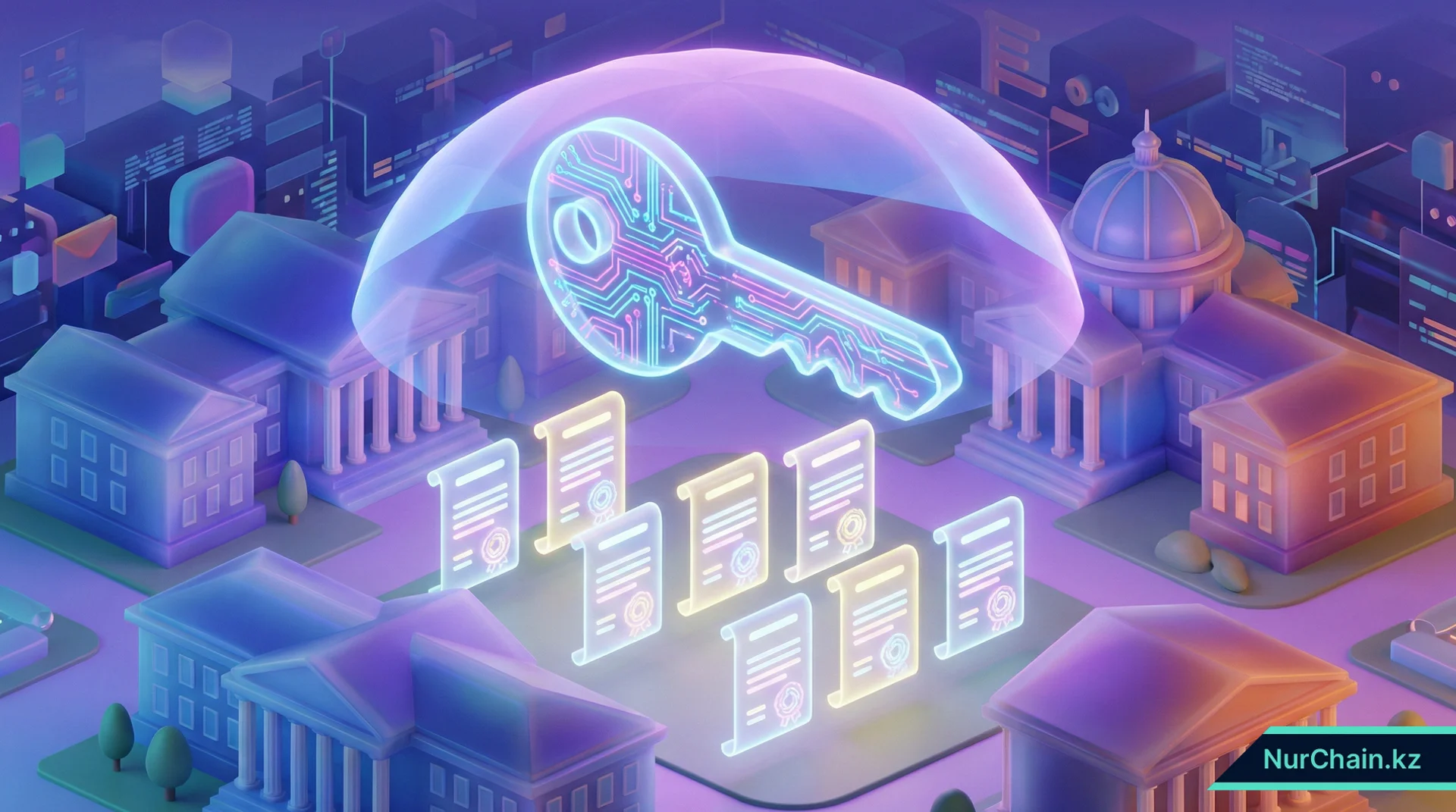
Imagine a high-tech thief forged your Rector’s seal. Now, imagine they started printing perfect-looking fake diplomas. It’s a chilling thought, isn’t it? Today, academic fraud (falsifying educational credentials) is a massive $21 billion industry. Because of this, your institution's digital root key is vital. Think of it as the modern-day version of that precious seal. It's the primary cryptographic key controlling your entire blockchain system.
Root key protection for universities is more than a technical checkbox. You are securing the foundational digital identity of your school. This is the strategic foundation for academic credential fraud prevention . It stops the creation of fake degrees. It’s the only way to protect your graduates. One security slip-up could ruin their hard-earned achievements.
Stop degree mills by moving away from old-school single-key systems. Instead, embrace cryptographic proof . This provides mathematical evidence that every transaction is authentic. This shift also protects you from the costs of a data breach . On average, unauthorized access to private information now costs $4.44 million. In this guide, we’ll walk you through multi-signature governance. This security protocol requires multiple people to authorize any action. We’ll also cover air-gapped hardware storage. This means keeping digital keys on devices never connected to the internet. Finally, we'll set up a resilient key lifecycle. This covers the whole process of generating, using, and retiring keys, as well as how to handle retractions and corrections. Together, these steps keep your academic integrity ironclad.
🛡️ Establishing a secure digital seal through robust key management is the non-negotiable security foundation for the entire Technical Guide: Implementing NFT Diplomas.
Why Root Key Protection Is the Foundation of Academic Integrity
Think of your university's root key as the modern, digital version of the Rector’s official seal. It represents the ultimate proof of authority. To ensure this seal is never misused, root key protection for universities is your essential first step. If this key falls into the wrong hands, an attacker could issue fraudulent diplomas that look mathematically perfect. To a verification system, these fakes would appear identical to the real thing, giving a high-tech boost to the $21 billion global academic fraud ecosystem .
We are facing a massive shift in how we protect our reputations. Academic credential fraud prevention has become a central challenge for modern registrars. The rise of degree mills is a serious concern, and reports from the Association of Certified Fraud Examiners (ACFE) make it clear: credential fraud is a significant part of workplace deception. Because of this, we must move toward cryptographic proof to restore institutional trust. You might be wondering, how does blockchain prevent degree mill fraud? It works by creating a permanent, verifiable record that no unapproved entity can replicate. This isn't just a hypothetical threat; the stakes are incredibly high because our current systems are under constant fire.
It is hard to overstate how vulnerable traditional, single-key systems really are. When an institution relies on just one "master key," it creates a dangerous single point of failure . This is particularly worrying since 97% of higher education institutions suffered a breach or cyberattack in the last year alone. That is nearly double the rate seen in primary schools. You have to ask: What is the cost of a data breach in higher education? When these breaches occur, they aren't just embarrassing-they are financially ruinous. To give you an idea of the scale, the global average cost of a data breach reached a staggering $4.44 million in 2025 . Just detecting and dealing with the fallout can drain $1.47 million from a university's budget, making data breach mitigation a top priority for IT departments.
While we often hear that blockchain is "unhackable" because of its immutability , that only applies to data already written on the ledger. Utilizing an immutable ledger ensures that once a degree is verified, its record can never be disputed or altered. The real target for sophisticated fraudsters is the authority to write new data. If a key is compromised, the integrity of every future credential is at risk. This is why blockchain root key risk management is the most critical part of the security puzzle. Furthermore, these problems can remain hidden for a long time. Industry data shows that breaches involving stolen credentials take an average of 328 days to identify and contain. Protecting that root key is not just a technical task-it is about defending the very value of every degree the university has ever issued.
Why It Matters: A compromised key does not just leak data; it devalues the hard work of every student. In a world where university breaches are nearly universal, your digital seal is the only thing standing between academic prestige and a total loss of public trust.

Implementing Multi-Signature (Multi-Sig) Governance for Rectors
If one key creates a single point of failure, why not require several? This is the core logic behind a multi-sig wallet . University blockchain key management becomes much safer when you share the security burden across your leadership team. Instead of one person holding all the power, a transaction only moves forward when multiple independent parties give their approval. This is no longer just a niche idea; it’s the gold standard for secure organizations. Why is a multi-signature wallet better for academic institutions? Simply put, it ensures that even if one administrator is compromised, your school's digital authority remains locked down. By 2025, enterprise-grade wallets grew to 9 million , marking a 47% jump in adoption.
The main takeaway is that these collaborative models align perfectly with the World Wide Web Consortium (W3C) standards for Verifiable Credentials . Implementing multi-sig governance for higher education ensures you issue digital records under strict supervision. It ensures you manage decentralized identifiers (DIDs) through teamwork rather than leaving a single door open for hackers.
For a university, experts often recommend a 3-of-5 configuration . If you’re looking at how to implement a 3-of-5 multi-sig for university leadership , start by identifying the five key roles that will hold the signing devices. In this setup, user access roles are distributed among five unique leaders: the Rector, the Registrar, the Provost, and perhaps two board members. To issue a batch of diplomas, at least three of these five people must sign off. This model is gaining massive traction- 59% of institutional crypto allocations now use self-custody multi-sig solutions . Institutional self-custody keeps you as the sole arbiter of your academic data. It moves the university away from "trusting a person" and toward "trusting a process."
This M-of-N threshold creates a vital safety net. If a Registrar loses their device or a Rector is away, the university still has a quorum to keep things moving. It’s a resilient way to manage high-stakes digital assets, which is why institutional wallet ownership grew 51% last year. Furthermore, these systems create a transparent on-chain audit trail . Since 100% of higher education leaders now rank cybersecurity as a top priority, having a permanent record of who authorized what is essential for staying compliant with modern regulations.
Try This: Map out your "Digital Quorum." Identify five stakeholders who already have traditional signing authority and imagine how a 3-of-5 digital approval process would strengthen your current workflow.

Best Practices for Physical and Digital Key Storage
Once you have your keys, where should you store them? Don't store them as plain text on a computer or in an email. Instead, top-tier institutions use FIPS 140-3 compliant Hardware Security Modules or HSMs . Integrating hardware security modules (HSM) for universities provides a level of protection that software-based passwords simply cannot match. This is the latest security standard and serves as the mandatory benchmark as older certificates move to the "Historical List" by September 2026. Maintaining FIPS 140-3 compliance in education is rapidly becoming a requirement for any school that values its digital reputation. These modules ensure you generate and store keys in a specialized, tamper-resistant environment.
For your most sensitive signers, such as the Rector, air-gapped hardware wallets are the preferred choice. These devices create a physical barrier between your most sensitive keys and the rest of the world. Because these devices never connect to the internet, they effectively shut the door on phishing-the most common way hackers gain entry. You might ask: what is the difference between air-gapped storage and air-gapped hardware wallets for rectors ? Essentially, a hot wallet is like leaving your safe open on a busy street, whereas air-gapped storage is like keeping it in a secure bunker offline. Phishing still accounts for 16% of all breaches, and these attacks carry a heavy price tag, averaging $4.8 million per incident. By keeping keys offline, you make it physically impossible for a remote hacker to steal them.
Go a step further by distributing your signers across geographically separate locations. This protects your system from physical threats like theft or natural disasters at a single campus. This level of physical security supports the global blockchain education market, which experts project will grow significantly through 2032. For the ultimate layer of protection, you can use technologies like Threshold Signature Schemes or TSS or Multi-Party Computation or MPC. This means a full private key never actually exists in one single place at one time. This serves as a powerful defense against malicious insider attacks . Considering that insider breaches carry the highest average cost of $4.92 million, keeping the key "fragmented" is a smart strategy.
Quick Insight: Digital security often requires a physical solution. By using air-gapped devices and geographic separation, you are essentially building a digital vault that no amount of clever coding can crack from the outside.

Establishing a Key Lifecycle and Recovery Strategy
Security isn't a "set it and forget it" task; it’s a continuous lifecycle. Effective key lifecycle management ensures you regularly update and audit keys so they never become stale or vulnerable. Follow the NIST SP 800-57 guidelines to build a clear roadmap for generating, using, and retiring your keys. Data from IBM shows that institutions using smart security and automated management cut their breach containment time by a full 80 days. How do universities protect private blockchain keys? They do it by sticking to these global standards, which slashes the financial damage if someone tries to break in.
Integrating AI-powered defense tools into this cycle changes the game completely. Modern data shows that AI-driven security can lower breach costs by $1.9 million while identifying threats much faster. Private key security for academic credentials gets a massive boost when AI flags unusual signing patterns before the damage is done. One of the biggest fears in blockchain is losing access forever, but you can prevent this with a decaying multisig model. This smart contract setup allows your signature requirements to decrease over time if primary signers go inactive. By including disaster recovery and backup strategies like seed phrase recovery , you ensure that hardware failures or leadership changes never lock you out of your own system.
This backup is vital because human error still causes 42% of all data breaches . As a final fail-safe, keep a sealed backup key or seed phrase in a high-security environment, like a fireproof bank vault or with a regulated institutional custodian. This might seem extreme, but with cybercrime projected to cost the global economy $10.5 trillion annually , you can't be too careful.
Technology is only as strong as the people using it. Providing cryptographic proof for diplomas is your goal, but it requires constant human vigilance. While signature-based detection catches 90% of attacks, you need more than just software. Regular key rotation , quality assurance (QA) testing, and staff training are what truly make your credentialing strategy tamper-proof.
Takeaway: Your recovery plan is just as important as your primary security. By combining strict NIST standards with AI defenses and a solid "seed" backup, you ensure your institution remains in control, even when the unexpected happens.

Summary: Fortifying Academic Integrity through Strategic Key Management
The security of your university's blockchain is only as strong as your key management. As we’ve seen, that root key is your institution's digital voice. Protecting it isn't just a tech issue; it's the front line in fighting the global surge in fake credentials. Traditional systems usually have a single point of failure , where one part failing stops the whole system. Basically, one mistake can ruin your school's reputation. That’s why switching to multi-sig governance is a vital step.
We recommend configurations like the 3-of-5 model . You should spread "signing power" among leaders like the Rector, Registrar, and Provost. This ensures no single compromised account puts your reputation at risk. This collaborative approach helps everyone "trust the process" rather than an individual. It also aligns you with global standards for verifiable credentials , which are digital documents that anyone can instantly check for authenticity.
The way you store keys matters just as much as who holds them. Think of your storage like a "digital vault." We suggest using FIPS 140-3 compliant Hardware Security Modules (HSMs) . These physical devices manage keys according to the highest security standards. You should also use air-gapped hardware wallets -tools kept offline to store digital assets. Together, they create a physical barrier that remote hackers cannot bypass. This is a huge win for mitigating risks like phishing and preventing online breaches.
Try combining these tools with geographic separation. You can also use methods like Multi-Party Computation (MPC) . This allows multiple parties to compute results without ever revealing the private key in its whole form. Doing this significantly lowers the risk of an "inside job." Always remember that staying secure is a continuous journey, not just a one-time task.
Be sure to follow NIST guidelines for key lifecycles, which provide the gold standard for generating, using, and retiring keys. You should also use AI-powered defense tools to flag unusual activity. Finally, set up recovery strategies like decaying multisig , where the required signatures decrease over time if a key is lost. These strategies transform your blockchain into a tamper-proof fortress, ensuring every degree you issue keeps its value and your public trust remains rock-solid.
🚀 Ready to put your security into action? Now that your private keys are protected and your governance model is set, you are ready for the execution phase. Move from protection to production by exploring The Technical Process of Minting NFT Diplomas.
