Reducing University Administrative Costs with Blockchain Diplomas
 Author:
 Reading time:
12 min
Reading time:
12 min
 Difficulty:
Easy
Difficulty:
Easy
- Direct Cost Savings from Eliminating Paper-Based Verification
- Accelerating the Verification Process from Weeks to Seconds
- Mitigating Financial Risks and the High Cost of Fraud
- Long-Term Efficiency Gains Through Scalable Infrastructure
- Summary: Future-Proofing Education through Efficient Digital Credentials
Have you ever looked at a student's diploma? You aren't just looking at paper; you're seeing a massive, hidden mountain of administrative costs . Security paper costs a fortune. Meanwhile, your staff wastes weeks manually verifying old records. Traditional credentialing is a major financial drain. Universities everywhere feel this frustration. The question is: how do you modernize without breaking the bank?
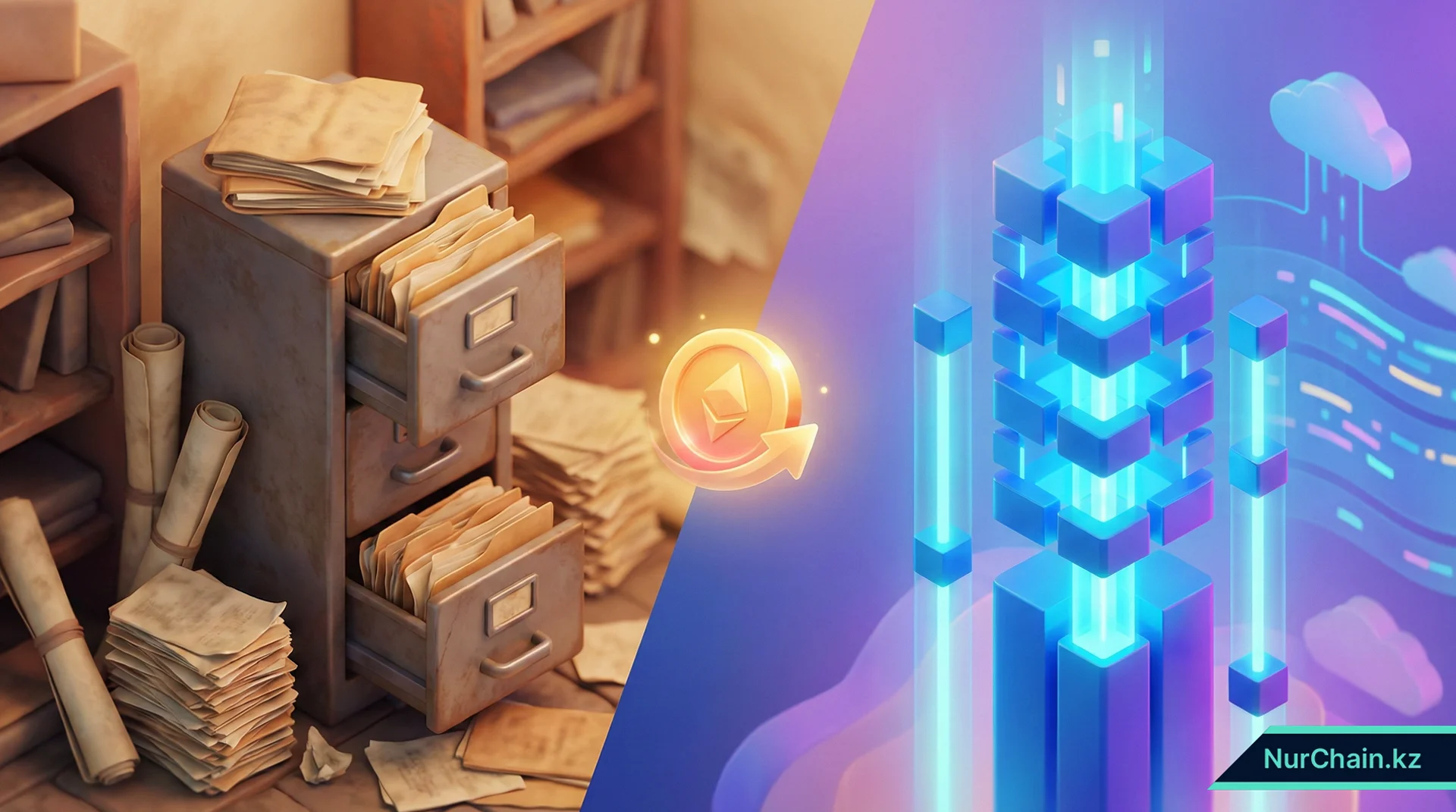
Shifting to blockchain diplomas is the strategic fix for this challenge. It creates a universal framework for secure, instantly verifiable credentials. Going digital-first lets your institution finally lock in the environmental benefits of moving from paper to digital diplomas. You can trade those dusty filing cabinets for a "single source of truth" where everyone uses the same accurate data set. This slashes overhead expenses and protects your reputation. Here is how this technology delivers direct savings. We'll look at how to accelerate verification from weeks to seconds and how it cuts the high costs of academic fraud. Finally, we’ll explore a scalable infrastructure for the future of global education. This is the technical framework that grows with your needs.
🏗️ Understanding the shift from paper to digital cost-efficiency is a fundamental building block of the Strategic Benefits of NFT Diplomas for Universities in Kazakhstan framework.
Direct Cost Savings from Eliminating Paper-Based Verification
Have you ever stopped to consider the real price of the paper your degree is printed on? When we talk about traditional credentials, we’re not just looking at a simple sheet of cardstock. To prevent forgery (the illegal copying of documents), your university must invest in high-security paper, holographic seals, and specialized printing techniques. These security features drive the price up to between $5 and $15 per document. You might wonder, what are the costs of traditional paper-based diploma verification ? Beyond the raw materials, the reduction in operational overhead (the decrease in daily business expenses) is massive once you factor in the labor for physical filing and manual checks. When you multiply that cost by thousands of graduates every year, "paperwork" becomes a major budgetary drain.
By transitioning to blockchain diplomas, your institution can effectively erase these physical production costs. It’s not just the paper, though; it’s the logistical nightmare (the organization and movement of goods) involved in mailing these documents. For large institutions, especially those in Kazakhstan, the annual bill for postage and couriers places a heavy burden on the budget, highlighting why you need to gain a competitive advantage in the Kazakhstani education market. Implementing secure digital diplomas Kazakhstan institutions can trust is your first step toward reducing university paperwork costs , which is vital for attracting international students to Kazakhstan. How does blockchain cut these administrative expenses? It removes the need for physical holographic seals and security paper that are so prone to damage and loss. This shift toward digital issuance fuels a global blockchain in education market that Business Research Insights (2025) values at $0.72 billion in 2026 and projects to reach $13.52 billion by 2035, growing at a staggering CAGR (the mean annual growth rate of an investment) of 43.94%.
We are heading toward a world where global education spending is estimated to hit $7.5 trillion by 2025, and universities simply can't afford to stick with manual, paper-heavy workflows. In fact, by moving to automated digital systems, your school can achieve up to a 90% reduction in administrative costs. By adopting blockchain diplomas administrative costs drop significantly because the system replaces manual labor with automated trust. Think of blockchain as a "single source of truth" (a central provider of data that everyone agrees is accurate). It removes the need for expensive physical storage space while improving alumni engagement and tracking far more effectively than paper archives ever could.
Quick Insight: Digital transformation isn't just a trend; it's a survival strategy. Moving away from paper-based verification lets you reclaim 90% of your administrative budget and turn "dead" storage space back into active learning environments.

Accelerating the Verification Process from Weeks to Seconds
Verifying a diploma in Kazakhstan usually feels like a slow-motion dance of formal requests, manual database searches, and waiting for official letters. This manual process typically drags on from several days to several weeks, which is a massive headache for both the university and the graduate waiting to start a new job. You might ask: how long does it take to verify a degree using blockchain? Unlike the traditional crawl, it happens instantly, representing a giant leap for blockchain in higher education efficiency . This inefficiency remains a major bottleneck in the $1.24 billion global education verification service market.
Blockchain changes the rules of the game entirely. Imagine turning a two-week wait into an instant, automated cryptographic check . This technology allows employers to confirm the authenticity of a degree in mere seconds. This transition toward automated degree verification systems allows for manual workflow automation, freeing your staff from the drudgery of paper-chasing. It’s no wonder we are seeing a 14.4% CAGR (Compound Annual Growth Rate) in the demand for real-time digital verification technologies. By automating those "long-tail" search queries that clog up your staff's inbox, you can free up hundreds of human hours every year.
Instead of hunting through filing cabinets, your team can focus on complex student support tasks. This shift is part of a much larger $26 billion global surge in digital identity verification. This creates a network of interoperable educational records that can be shared across institutions effortlessly, making digital credential verification for universities a seamless part of the hiring process. By utilizing specialized networks like the eGAB Chain, which uses multidimensional data streams and IoT-enabled security, your institution can automate everything from micro-credentials to full PhDs. This ensures that even during peak graduation seasons, high volumes of requests won't create an administrative bottleneck.
Why It Matters: In the modern job market, speed is everything. Reducing verification time from weeks to seconds doesn't just save money-it gives your graduates a competitive edge by highlighting the value of instant global verification for Kazakhstani graduates.

Mitigating Financial Risks and the High Cost of Fraud
Academic fraud casts a dark shadow over the entire education sector, making combating fake degrees in Central Asia an absolute priority. Right now, the fraud detection and prevention market is worth a staggering $52.82 billion, as companies fight a losing battle against fake qualifications and resume lies. You might ask: can blockchain actually eliminate academic credential fraud? While no system is totally immune to human error at the source, the document forgery protection an immutable ledger provides is simply unmatched in today’s digital landscape. For your business, the stakes are high: organizations can lose up to $30,000 per professional every single month due to delays and manual verification errors.
These financial risks explain why the employment screening services market is growing at a 9.4% CAGR and should hit $7.09 billion by 2029. Blockchain’s immutability -the fact that records cannot be changed-is your best defense. Once your institution writes a diploma onto the blockchain, forging or altering it becomes virtually impossible. Are you wondering if blockchain is more secure than your current university database? Because it uses decentralized cryptographic verification , it delivers the exact level of security that academic fraud prevention blockchain technology was built for. This saves your staff from wasting countless hours investigating and resolving credential disputes. With identity fraud recently costing over $52 billion-a risk the TransUnion H2 2025 Global Fraud Report highlights by noting organizations lost an average of 7.7% of annual revenue to fraud-an unalterable record is a game-changer.
Adopting a Self-Sovereign Identity (SSI) model -a sector growing at a 30.8% CAGR to reach $14.37 billion by 2032-significantly lowers your institution's liability. Navigating personal data under strict regulations like GDPR is a legal minefield. To ensure total data privacy compliance (GDPR) , many universities now use a self-sovereign identity for graduates, where a digital wallet for students acts as a secure personal vault. In this setup, the graduate becomes the "data owner," keeping their credentials in their own wallet and managing all access permissions themselves. This move pulls the university out of the middle of the data management struggle, cutting both costs and risks. This is vital, especially since DeepStrike research for Q2 2025 shows educational organizations now endure an average of 4,388 cyberattacks every week.
Takeaway: Blockchain does more than just stop fraud; it completely shifts how we handle data ownership. By giving students digital wallets , you sidestep the legal and financial headaches of managing sensitive data while offering a guarantee that your degrees are forgery-proof.

Long-Term Efficiency Gains Through Scalable Infrastructure
Blockchain doesn't get "tired" or overwhelmed as your university grows. Unlike legacy databases (older computer systems) that require constant, expensive IT maintenance and manual updates, blockchain offers a permanent and scalable infrastructure. This digital transformation in university administration-which shows how NFT diplomas align with Digital Kazakhstan program KPIs-isn't just a tech upgrade; it’s a necessary pivot. This is critical as we approach 2030, a year when the digital economy is expected to contribute 30% of global GDP, according to the Digital Cooperation Organisation (DCO). Your administration needs a system that can handle an increasing volume of credentials without forcing you into a linear increase in staff.
The real game-changer here is the Non-Fungible Token (NFT) , a unique digital identifier that no one can copy or swap. By using NFTs as a format for diplomas, we can aggregate a student's entire journey-from a weekend certificate to a PhD-into one verifiable portfolio. You might wonder: what is the CAGR of blockchain in the education market? The growth is driven by the realization that blockchain-based student records provide the only reliable single source of truth for lifelong learning. This streamlines tracking in a global NFT market that is currently growing at a 28.1% CAGR (Compound Annual Growth Rate).
By adopting the same standards as global leaders like MIT and Harvard, universities in Kazakhstan can lower the "cost of entry" for their graduates in the international market and explore how NFT diplomas can boost international university rankings. Think about the human element: how do digital diplomas improve graduate employability? When you give students verifiable micro-credentials and NFTs of their specific skills, you provide them with a high-trust resume that delivers a clear ROI of blockchain in education . Using standardized, global verification protocols can reduce average identity verification costs by 15% by 2029. Automated systems also virtually eliminate "human error" in record-keeping, opening doors for leveraging data analytics from NFT diploma usage in higher ed. You won't have to spend money re-issuing documents or fixing typos in old databases, ensuring your records remain accurate and interoperable across borders for an increasingly mobile student population.
Try This: Look at your current IT maintenance budget for legacy student databases. Comparing those recurring costs against a one-time blockchain integration often reveals that the digital path isn't just more modern-it's significantly more affordable in the long run.

Summary: Future-Proofing Education through Efficient Digital Credentials
Let's get right down to it: the world is changing. Switching to blockchain technology isn't just about chasing a shiny new gadget; it's a fundamental shift in how you manage your institution's most valuable assets. By ditching paper-based systems, your university can slash administrative costs by 90% . Think about it-you'll wipe out the high price of holographic seals and security paper while finally ending the logistical nightmare of physical postage.
This financial efficiency comes with a massive leap in speed. Blockchain in higher education transforms the old, multi-week manual verification crawl into an instant, automated cryptographic check. It uses smart mathematical algorithms to prove data is real, right now. These time savings do more than just lighten your team's workload-they give your graduates a massive competitive edge. In a fast-moving job market, proving skills in real-time is the new standard.
The benefits reach deep into security, too. By using an immutable ledger -a record no one can change or delete-your university provides unparalleled protection. You get robust document forgery protection that stops fake certificates in their tracks. This doesn't just safeguard your institutional reputation; it shields businesses from the massive monthly losses caused by verification errors.
You can also significantly lower your legal liability by adopting a Self-Sovereign Identity (SSI) model. This system gives individuals sole control over their digital identities, which slashes your data management risks. By empowering students with digital wallets, you put them in full control of their information while staying fully compliant with GDPR. Collectively, these tools create a permanent infrastructure that replaces clunky legacy databases with a modern system. It tracks lifelong learning from micro-credentials to PhDs as unique NFTs. This digital transformation means your university can handle more students without constantly hiring more staff, ensuring long-term financial health and global compatibility.
🚀 Ready to see the value in action? Now that you understand how blockchain cuts internal overhead, see how that efficiency creates immediate advantages for your alumni on the world stage. Explore The Value of Instant Global Verification for Kazakhstani Graduates.
