Long-Term Archival Costs: Physical Archives vs. Blockchain Storage
 Author:
 Reading time:
12 min
Reading time:
12 min
 Difficulty:
Easy
Difficulty:
Easy
Have you ever stopped to wonder what actually happens to your most important records? Think about that hard-earned diploma or a critical legal contract. What happens ten, twenty, or even fifty years after you've filed them away? Most of us think of "archiving" as just putting a box in a room, imagining it's a simple process of storing historical records and then forgetting about them.
But for institutions, the reality is a bit of a logistical nightmare. It involves rising rents and expensive climate control-those systems you need to maintain temperature and humidity. There is also the constant worry of paper simply crumbling away over time.
If you've been feeling the pinch of escalating storage fees, you aren't alone. We know the daily frustration of hunting down physical files, and you’re in the right place to find some answers. We're going to break down the hidden financial drain of long-term archival costs and look at why blockchain record-keeping is becoming the go-to solution. Using a distributed ledger to store data isn't just a trend; it's a strategic response to this challenge .
Everything we do is about creating a universal framework to ensure your credentials are secure, trusted, and instantly verifiable. We’ll compare the compounding expenses of old-school physical storage against the "pay-once" efficiency of decentralized networks-systems where your data lives across multiple locations rather than on one vulnerable central server.
By the time we're done, you’ll see the massive shift in ROI-the return on investment you get when moving from physical to digital. We'll explore how storage endowments work (these are funds set aside to cover data hosting indefinitely) and how they can actually guarantee data for centuries. We'll also explain why moving to the blockchain is essential; it's really the only way to scale trust in today's global economy.
🏛️ Evaluating the transition from decaying physical archives to permanent blockchain storage is a cornerstone of the financial strategy detailed in our Cost Analysis and ROI Guide.
The Economic Burden of Physical Document Retention Over 50 Years
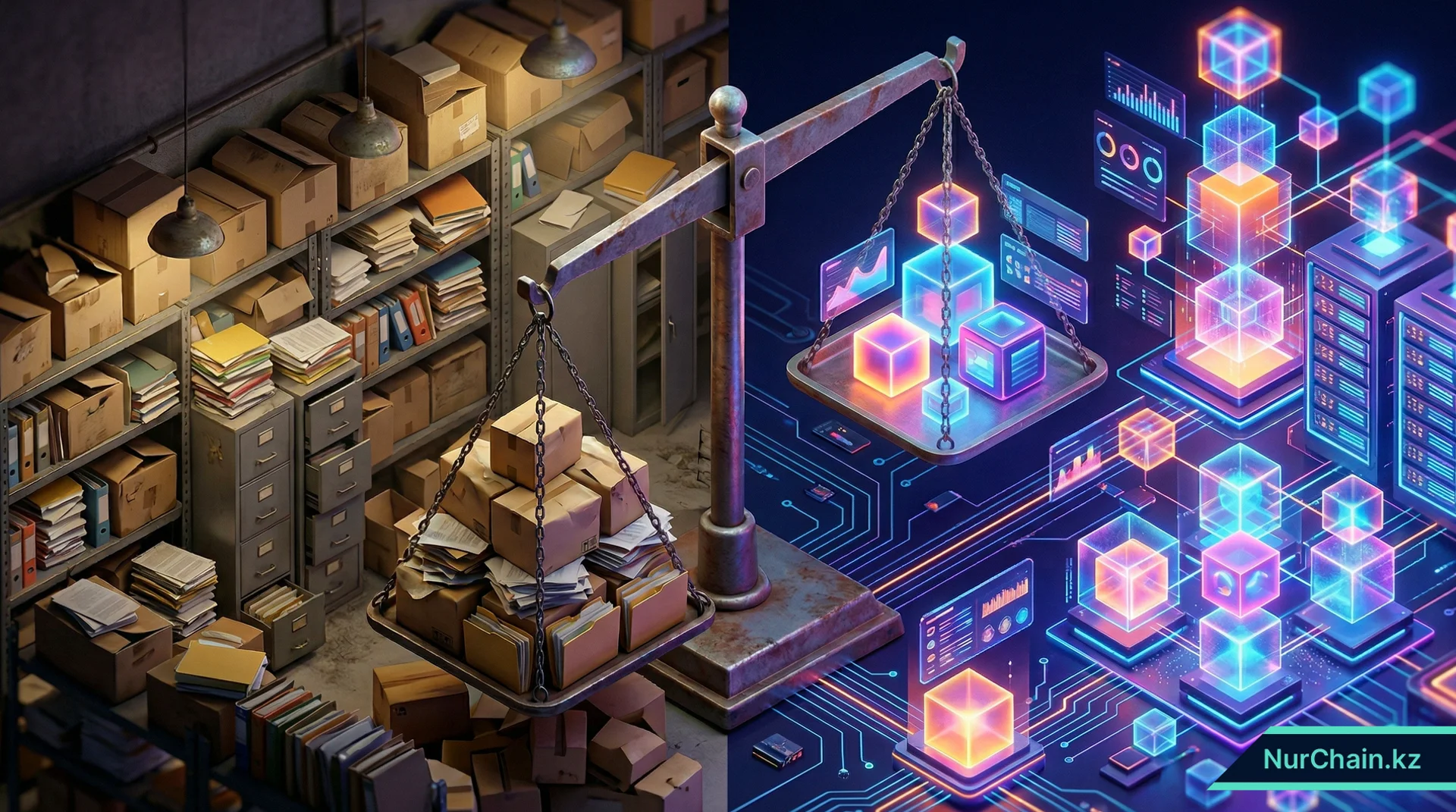
Have you ever stopped to consider the massive logistical weight of keeping a single piece of paper for half a century? This realization leads many administrators to ask: how much does it really cost to store documents for 50 years? When you total the long-term archival costs , the numbers are eye-opening because they cover physical space, high-level security, and specialized upkeep. The law often demands a mandatory 50-year retention period for your critical records. To stay in regulatory compliance , you can't just leave these files in a basement; they need constant, active eyes on them. Truth is, this is far more than a filing task-it’s a heavy, compounding financial drain that often goes unnoticed. The cost of paper document storage isn't just a line item; it’s a growing weight on your annual budget. Keeping physical documents involves much more than paper; you need high-security, climate-controlled space. You might wonder: what are the risks of physical document retention? Beyond fire or flood, data degradation is a silent threat as ink fades and paper turns brittle over the decades. With inflation and rising property values, these costs typically climb by 3–5% every year.
Paying "rent" is only the starting point. The real productivity killer is the manual labor your team needs to manage these ever-growing records. According to research from IDC, administrative staff lose up to 20% of their workday searching for information buried in hardcopy files. When you think about what’s the manual labor cost of document retrieval, it becomes clear that administrative overhead in archiving is a major drain on your human resources. The Association for Intelligent Information Management (AIIM) supports this, noting that "information silos" in physical archives are a persistent barrier to efficiency. Furthermore, there is a nearly 50% chance you won't even find the record on the first try. Because of massive space needs and the need for constant human intervention, the total cost of ownership (TCO) for paper is often three times higher than modern digital alternatives. Choosing between physical vs digital record management isn't just about saving space; it’s about ensuring your institution survives in a data-driven world.
For a mid-sized university, as outlined in an NFT diploma budget proposal, these cumulative costs are substantial. Between specialized security, rigorous pest control, and professional archiving services, your annual bill can easily range from $50,000 to $100,000. Even moving to digital formats has its hurdles. Professional scanning services, which are part of your initial implementation costs , can run anywhere from $0.08 to $0.18 per page. If you are dealing with fragile historical documents that need "white-glove" handling, those prices can jump to $0.40 per page .
Takeaway: Physical archiving is more than just "storage"; it is an escalating, permanent liability. Considering a 50-year timeline, the combination of real estate inflation and labor inefficiency makes paper one of the most expensive and least effective methods for record-keeping.

The Radical Efficiency of One-Time Blockchain Storage Costs
Imagine paying for storage once and never seeing another monthly bill for the next two centuries. This is the massive paradigm shift (a fundamental change in basic assumptions) blockchain technology offers. Blockchain record-keeping represents a profound digital transformation in archiving, moving you away from temporary fixes toward permanent data storage solutions. When you store a diploma "hash" (a unique digital fingerprint for data) or compressed metadata on a blockchain like Polygon (a low-fee, scalable network), the financial commitment is almost nothing. In fact, that transaction fee averaged just $0.02 in 2025. You might wonder: is blockchain cheaper than physical storage for archives? Once you stop paying for physical space and start paying for digital bits, the answer is a resounding yes. By paying this tiny one-time fee, you eliminate the recurring monthly storage "rent" of traditional cloud or physical archives.
We are seeing a massive, industry-wide shift toward decentralized storage models like Arweave (a network built for permanent data storage). If you've ever asked how the Arweave storage endowment works, think of it as a permanent trust fund for your data. On this platform, a one-time payment of about $3,500 per Terabyte secures data availability for over 200 years. This "Storage Endowment" (a math model using interest to fund storage indefinitely) uses conservative estimates of dropping costs to ensure data stays accessible for centuries without extra funding. When you look at the numbers, this model beats the cost of centralized cloud providers like AWS S3 in just seven to ten years. This highlights the main difference between centralized cloud and decentralized storage , as the latter doesn't rely on a single company staying in business. For organizations making the move, long-term cost reductions can reach 90%. Why? Because blockchain technology removes the need for expensive buildings, security guards, and climate control systems required to keep paper safe.
Smart Contracts (self-executing code protocols) enable this radical efficiency. Essentially, these code protocols automate the archiving process, cutting out human error and reducing administrative paperwork. Instead of spending hours on manual cataloging, you finish processes in milliseconds. This reliability comes from Distributed Ledger Technology (DLT) , which ensures records spread across a global network. Because this is a decentralized ledger (a record system run by many computers), your "master record" is immune to the chemical decay and physical wear that destroys paper over 50 years. This inherent immutability means that once you set a record, no one can ever alter or delete it. Your data stays pristine without the need for further manual effort or ongoing financial investment.
Did You Know?: Moving to a "pay-once, store-forever" model does more than save money; it fundamentally changes how we value information. On-chain storage (data recorded directly within the network) ensures a graduate's credentials stay as valid and accessible in fifty years as they are today, with zero maintenance costs .

Comparative ROI: Retrieval Speed and Verification Costs
Evaluate the Return on Investment (ROI) (a performance measure used to evaluate the efficiency of an investment) by looking at a common scenario: a graduate needs to verify a 20-year-old diploma for a new job. When you compare physical archives vs blockchain storage, the gap in record verification efficiency is impossible to ignore. Traditional physical archives are often slow and clunky. It can take 3–5 business days for a staff member to locate a file, and the labor involved costs the institution between $30–$50 per request. Many CFOs now ask: what is the ROI of switching to blockchain archiving? The answer lies in the massive reduction of the total cost of ownership (TCO) for documents. Conversely, blockchain-backed retrieval is instant and free for the end-user. A simple QR code or public key (a unique cryptographic code that allows users to receive and verify digital data) is all it takes to prove the document's authenticity. The system relies on secure hash functions to create a digital lock that is unique to every single record.
The stakes are even higher when you consider the financial impact of diploma fraud. The $37.8 billion global fraud detection market (the worldwide industry dedicated to identifying and preventing deceptive practices) exists because verifying physical credentials is so difficult. Fraudsters (individuals who commit deception for financial or personal gain) rely on the fact that manual checks are slow and tedious. Blockchain provides instant cryptographic verification (a method of proving authenticity using secure mathematical algorithms), effectively stopping forged credentials in their tracks. If you're wondering how blockchain prevents credential fraud, it’s by providing a 'source of truth' that cannot be faked or bypassed. By making this transition, schools and businesses turn their archives from a cost center (a department or function within an organization that does not directly add to profit) into a value-added service. Using Intelligent Document Processing (IDP) (the automation of data extraction from complex documents using artificial intelligence) on-chain can lead to a 4x increase in processing speed for graduates entering the workforce. This is exactly how universities reduce archival costs while simultaneously providing a better service to their alumni.
You need this scalability (the ability of a system to handle a growing amount of work) for the future. As we look ahead, the global number of higher education students is projected to reach 380 million by 2030 , according to projections from the UNESCO Institute for Statistics (UIS) . A physical warehouse requires a linear and expensive expansion of square footage for every new student. Blockchain, however, handles millions of records with near-zero increases in marginal cost (the cost added by producing one additional unit of a product or service). Calculating a true decentralized data storage ROI , a process supported by real-world ROI case studies, requires looking at these long-term gains in speed and trust. It is the only way to scale trust without significantly increasing your budget.
Quick Insight: Efficiency is the ultimate ROI. In a world where 380 million students will soon require record verification, moving from a five-day manual process to a five-second digital one is no longer a luxury-it's essential for global economic mobility .

Summary: Transitioning from Permanent Liabilities to Perpetual Digital Assets
Look at the big picture: this isn't just a technical debate. Choosing between traditional archiving and blockchain is a total reimagining of how your institution creates value. As you’ve likely seen, maintaining physical archives is incredibly difficult. Relying on paper for a mandatory 50-year retention period simply isn't sustainable anymore-that’s just too long to keep a physical record safe and accessible.
Traditional storage has turned into a permanent and growing liability. Just look at the numbers: you’re facing annual rent hikes of 3–5% driven by real estate inflation. On top of that, you have heavy administrative overhead , or the constant costs of just keeping the lights on. Your staff can waste 20% of their day just searching for files, making paper storage a staggering three times more expensive than digital.
Beyond the budget, you face the physical risk of data degradation , where information quality gradually fades over time. What this means is simple: even when you're paying a premium for storage, the risk remains huge. There is a 50% chance a record won't even be found when a graduate needs it most. It’s a scary thought, isn't it?
Here is the solution: blockchain record-keeping offers you a way out. It provides a "pay-once, store-forever" model using decentralized networks like Arweave , which act as a permanent data storage network. By using this and the security of a Storage Endowment, your institution can finally change its strategy. You can swap those unpredictable monthly bills for a single, one-time payment.
This approach secures your data for over 200 years. This digital transformation in archiving replaces expensive warehouses with tamper-proof immutability -meaning your records can never be changed or deleted. It also uses automated Smart Contracts, or self-executing programs, to handle the heavy lifting for you.
These technologies do much more than just save you money. They turn a slow, five-day manual verification process into an instant and free service. With the world heading toward 380 million students, this shift is the only way to provide the record verification efficiency people need. It’s about the speed and accuracy required for your graduates to move and work globally.
You should move away from physical cost centers that only drain your budget. Instead, move toward decentralized value-added services. You can make sure those hard-earned credentials stay pristine, remaining accessible and fraud-proof for generations to come.
🚀 Ready to take action? Now that you understand the massive long-term savings of decentralized storage, the next logical step is to build your case. Use the NFT Diploma Budget Proposal Template to present these financial advantages to your institution's leadership.
