Are Kazakhstani NFT Diplomas Recognized Internationally?
 Author:
 Reading time:
12 min
Reading time:
12 min
 Difficulty:
Easy
Difficulty:
Easy
- How International Treaties Validate Kazakhstani Qualifications
- The Role of NFT Technology in Combatting Educational Fraud
- Global Compatibility Through the European Diploma Supplement
- Efficiency Gains in International Credential Verification
- Summary: Your Global Future, Secured and Verified through Kazakhstani Innovation
Have you ever worried that your hard-earned degree loses its "sparkle" the moment you cross a border? By "sparkle," we mean the prestige and perceived value of your qualification. It’s a common anxiety that many graduates feel when looking at the global job market.
Think about it. You put in years of hard work, only to face mountain-high piles of paperwork. Proving your credentials to a foreign employer can feel totally overwhelming. You might even ask yourself a tough question: are Kazakhstan's digital diplomas actually valid abroad, or are you just holding onto a digital novelty?
The shift toward NFT-backed credentials in Kazakhstan is the answer to that concern. NFT stands for non-fungible token-a unique digital identifier. This isn’t just a fancy tech experiment; it's a strategic response to global mobility challenges, heavily influenced by how the Digital Kazakhstan program influences EdTech laws. We designed this system to be secure, trusted, and instantly verifiable so you can carry your achievements anywhere.
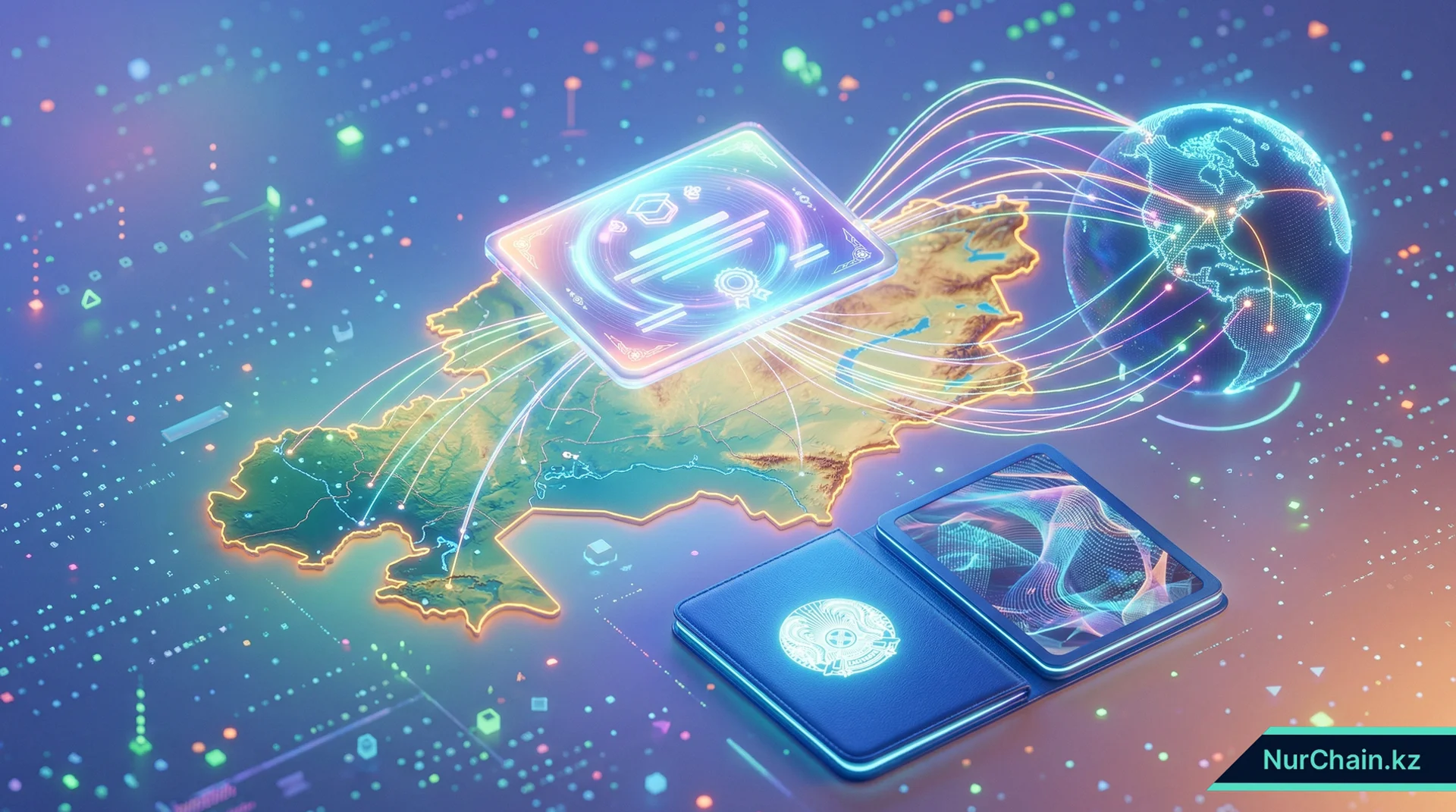
Think of it as a high-tech passport for your education that speaks the language of international law. We will explore the powerful legal treaties, including the Lisbon and Tokyo Conventions , that back your degree. We'll also look at blockchain technology-a decentralized digital ledger that effectively wipes out credential fraud. Plus, you'll see why the European Diploma Supplement makes your Kazakhstani qualification instantly readable to recruiters in London, Seoul, or anywhere else.
🌍 Validating your credentials on a global scale is a critical outcome of the regulatory standards established in the Legal Guide to NFT Diplomas in Kazakhstan.
How International Treaties Validate Kazakhstani Qualifications
Will your hard-earned degree actually "hold water" when you apply for a dream job halfway across the world? This usually comes down to one simple question: are Kazakhstan digital diplomas valid abroad just like traditional ones? To understand Kazakhstani NFT diplomas international recognition and whether the MSHE recognizes digital diplomas at home, you have to look at the legal frameworks spanning the globe. It's a valid worry, but the legal foundation supporting your qualifications is incredibly solid. At the center of this trust is the Lisbon Recognition Convention (LRC) . Since 2025, Kazakhstan has been a full member of this agreement, which the Council of Europe confirms 57 states have already ratified.
Does the Lisbon Convention cover NFT diplomas? Absolutely. The treaty focuses on the qualification itself, not the paper or pixels it's printed on. In fact, the Lisbon Recognition Convention Kazakhstan 2026 guidelines specifically encourage digital tech to boost educational mobility for students moving between member states. This framework is constantly evolving. In October 2025, the UNESCO committee launched a program using digital tools and AI to modernize how academic achievements are recognized across the globe. This network covers nearly all of Europe, plus Canada, Australia, and New Zealand.
Under the LRC, member countries must recognize your Kazakhstani qualification unless they can prove "substantial differences" in your curriculum. That’s a massive win that protects the academic rights of over 38 million people across the European Higher Education Area (EHEA) . The progress didn't stop there, either. In January 2026, Kazakhstan officially joined the Asia-Pacific Regional Convention on the Recognition of Qualifications , also known as the Tokyo Convention . This move extends formal recognition to 12 more countries, including giants like China, Japan, and South Korea. If you're wondering which countries recognize Kazakhstani degrees under the Tokyo Convention, the list features high-growth markets where professional opportunities are booming. This agreement ensures your digital credentials move with you seamlessly across the East.
The bottom line? Think of the NFT format not as a "new" degree, but as a high-tech, secure "container" for a qualification the international community already respects. It's simply a faster, modern way to verify what you have achieved .
Did You Know? The Lisbon Recognition Convention means your degree is "innocent until proven different." The burden of proof lies with the foreign institution to show why they shouldn't accept your diploma, rather than forcing you to defend its validity .

The Role of NFT Technology in Combatting Educational Fraud
Resume padding-inflating your achievements on a CV-is a massive problem. A 2025 survey found that a staggering 44% of job seekers admit to lying during the hiring process, and 24% specifically fake their education credentials. When fake diplomas are just a few clicks away, how does an employer know you're the real deal? Focusing on credential fraud prevention (the effort to stop counterfeit documents) is now a top priority for hiring managers worldwide. You might wonder how secure blockchain-based educational credentials really are-and who is responsible if blockchain verification fails-compared to the paper documents we've used for centuries.
This is where NFT technology changes the game entirely. The ENIC-NARIC networks , which act as the global gatekeepers for student and professional mobility, are pushing hard for blockchain solutions. They increasingly recognize blockchain diploma recognition Kazakhstan as a benchmark for implementing digital credential security blockchain (using distributed ledger technology to protect academic records). This shift makes perfect sense when you look at the numbers: typical organizations lose about 5% of their annual revenue to fraud. By using NFTs, Kazakhstani diplomas provide what experts call immutability-the quality of being permanent and unchangeable. In simple terms, once your degree is "minted" (created and registered) on the blockchain, that record stays there forever. It can't be hacked, forged, or accidentally deleted.
Kazakhstan currently leads the world in this space. Thanks to how the Law on Digital Assets applies to education and the 2025 Digital Code, these digital credentials carry the exact same weight as traditional paper documents. This ensures the legal weight of digital assets in Kazakhstan is robust while complying with Kazakhstan's data privacy laws, giving your NFT-backed achievements the same standing as any physical decree. Many students now ask: Is an NFT diploma better than a paper certificate for working abroad? The answer is a definitive yes, thanks to this inherent security and ease of use. It’s no surprise the country ranks 24th globally in the UN E-Government Development Index-we are literally building the future of secure education today.
Why It Matters: In the digital age, trust is your most valuable currency. By holding an NFT diploma , you aren't just showing a certificate; you're providing unhackable proof of your expertise that helps you stand out in a crowded, competitive job market.

Global Compatibility Through the European Diploma Supplement
Achieving the seamless verification of Kazakhstani degrees in Europe requires more than just a digital file; it requires a standardized language. What is the European Diploma Supplement, and why does it matter? How will it impact your future career? You might be asking, "Even if it is secure, can a recruiter in London or New York actually read it?" The answer is a resounding yes. We didn't build Kazakhstani NFT diplomas in a vacuum, especially regarding whether universities need a license to issue NFT diplomas; we designed them to be fully compatible with international standards. This happens through the European Diploma Supplement (DS) , a document recognized by all 49 EHEA member countries.
This European Diploma Supplement compatibility ensures that your academic journey is transparent and easily evaluated by any registrar or HR department. Following World Education Services (WES) standards is a key part of this process, as these organizations set the bar for how international achievements are measured. Think of the DS as a "universal translator"-a tool that makes information understandable across different systems-for your degree. It describes your studies in a way that international evaluators, the experts who assess the value of degrees from other countries, understand perfectly. For example, World Education Services (WES), a leader in the field that has processed over 4 million evaluations, already uses digital-first standards very similar to this.
On top of that, Electronic Digital Signatures (EDS) ensure that the data inside your NFT is legally binding. In Kazakhstan, these signatures have 100% legal equivalence to a handwritten signature. So, how do foreign employers verify a Kazakhstani NFT diploma? They often turn to official channels like ENIC-NARIC Kazakhstan diploma verification services, which now bridge the gap between digital issuance and international acceptance. This means when a foreign consulate reviews your digital record, they see a document that is as official as any stamped paper. We designed the system to be "readable" by automated HR systems and university databases worldwide, making the application process much smoother.
Quick Insight: Think of the Diploma Supplement as the "nutrition label" for your education. It informs foreign employers exactly what went into your degree, ensuring nothing gets lost in translation regardless of where you apply.

Efficiency Gains in International Credential Verification
Nostrification process automation -using technology to recognize foreign qualifications automatically-does more than just prove authenticity; it completely overhauls how we handle paperwork. Smart contracts for degree issuance (self-executing digital contracts that manage diploma granting) bring a level of speed to academia that was once impossible. If you’ve ever tried to verify a traditional diploma for a visa or an international job, you know the nightmare of endless phone calls and waiting weeks for a reply. NFT diplomas turn that "weeks-long" headache into an instant win.
Since these credentials live on the blockchain, they allow for instant, 24/7 verification . This can slash administrative wait times by a massive 90%. Universities see equally impressive results, as shifting to digital credentials can cut the time it takes to issue a degree from five days down to just one hour .
This transition belongs to a major global shift, with the blockchain education market expected to skyrocket over the next decade. As a graduate, you gain what we call Self-Sovereign Identity (SSI) -a model where you own and control your personal data. In plain English: you own your records. They sit in your digital wallet (an app for your digital assets), and you can give an employer access in seconds. This creates a smooth experience where you never have to worry about losing or damaging a physical copy. A common question comes up here: do I still need an apostille if my diploma is an NFT?
The legal side is just as solid. In January 2026, the President of Kazakhstan signed a new law giving these blockchain records full legal parity (meaning they have equal legal standing). While some regions still require a physical Apostille (the specialized certificate used to authenticate documents internationally), Kazakhstan leads the way with e-Apostilles . These digital stamps link your NFT directly back to the government’s central portal. This modern apostille for NFT diplomas Kazakhstan system simplifies the legal path for anyone heading overseas. Ultimately, you likely want to know: can a digital degree from Kazakhstan be used for a US visa? The answer lies in how quickly immigration authorities globally are accepting these verified digital standards.
Takeaway: The goal of an NFT diploma isn't just about "cool tech"-it’s about giving you total control over your career . It saves you time, saves your university money, and ensures your achievements are always just one click away from being verified .

Summary: Your Global Future, Secured and Verified through Kazakhstani Innovation
Look at the big picture. The shift toward NFT diplomas in Kazakhstan marks a massive leap forward. What it really does is make your academic achievements truly portable. They become globally respected. This isn't just about moving from paper to digital files. Instead, it's about building an unshakeable foundation of trust.
Kazakhstan is aligning with major international frameworks. One is the Lisbon Recognition Convention . This is the main legal agreement for recognizing qualifications in Europe and North America. Another is the newly joined Tokyo Convention . This is the equivalent framework for the Asia-Pacific region. Because of these agreements, your qualifications are now legally recognized across nearly 70 countries.
This network includes the European Higher Education Area and major Asia-Pacific markets. What does this mean for you? Imagine you are applying for a master's program in Europe. Or maybe you want a tech role in East Asia. Either way, your degree carries the full weight of international law.
The best part? Let's talk about the "burden of proof." This is the legal obligation to provide evidence. That burden shifts away from you. It moves onto any institution that might question if your degree is real.
The "why" behind this digital revolution is simple. It solves the twin problems of trust and time. Kazakhstan uses NFT technology and blockchain's inherent immutability (the fact that data cannot be changed once recorded). By doing this, the nation created a system where fraud is virtually impossible. This protects the value of your degree in a competitive global market.
Furthermore, you benefit from the European Diploma Supplement . This is a standardized document describing the nature and status of your studies. You also have Electronic Digital Signatures . These are the secure digital tools that authenticate your identity. Thanks to these, your credentials speak a standardized "universal language."
International HR departments can verify this instantly. So can the ENIC-NARIC networks . These are the European and National Academic Recognition Information Centres. This mix of legal protection and cutting-edge tech is powerful. It doesn't just make your diploma secure. It makes the entire verification process up to 90% faster.
Ultimately, this system provides you with Self-Sovereign Identity . This is a digital concept where you have full ownership of your personal data. In plain English, it puts you in total control. It ensures that your hard work is always just one click away. You are ready to open a new door anywhere in the world, staying updated on future EdTech legislation to watch in Kazakhstan.
🔮 The road ahead: Now that you understand the current international standing of these digital degrees, stay ahead of the curve by exploring Future EdTech Legislation to Watch in Kazakhstan.
