The Value of Instant Global Verification for Kazakhstani Graduates
 Author:
 Reading time:
10 min
Reading time:
10 min
 Difficulty:
Easy
Difficulty:
Easy
Imagine holding a dream job offer or a university acceptance letter right in your hands. It feels amazing, until a mountain of paperwork suddenly stops you in your tracks. It’s a frustrating spot to be in. If you are a graduate seeking a competitive advantage in the Kazakhstani education market, going international usually means facing the dreaded "apostille" process.
An apostille is simply a formal procedure to legalize your documents for use abroad. It’s a bureaucratic waiting game. The process often drags on for weeks or even a full month. When you’re ready to launch your career, waiting 45 days feels like an eternity. This is especially true when someone has to manually check an archive, which highlights why schools must focus on reducing university administrative costs.
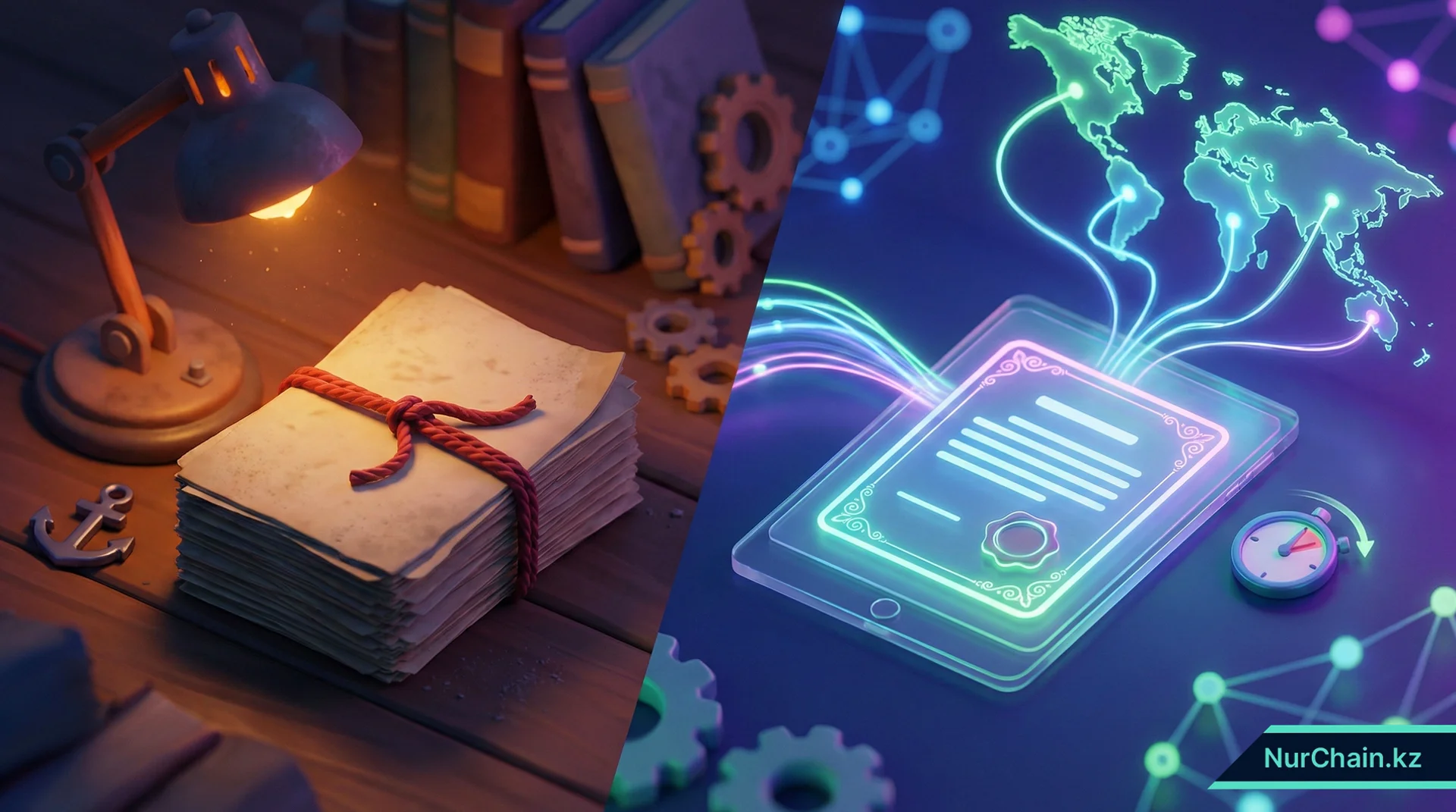
This is why the shift toward instant global verification changes everything. This refers to the immediate, worldwide validation of your credentials. We can now use blockchain technology . Think of this as a decentralized, immutable digital ledger. We also use NFT-based diplomas. These unique digital certificates prove both your ownership and the document's authenticity. By using these tools, we turn a slow, manual slog into a streamlined process. It’s secure, trusted, and finishes in seconds.
This article explores how these digital-first solutions eliminate apostille delays. You will see how they bridge the "trust gap" with top-tier international universities. We want to give Kazakhstani graduates a truly portable asset . This asset works perfectly in today’s global remote-work economy.
🎓 Instant verification is a cornerstone of the strategic benefits of nft diplomas for universities in kazakhstan overview - en, transforming how you interact with the global academic market.
How Does Blockchain Elimination of Apostille Delays Accelerate Careers?
Have you ever felt like your career was on hold because of a piece of paper stuck in a government office? Many graduates in Kazakhstan know this frustrating reality all too well. Verifying a degree the traditional way involves the tedious apostille process , and it’s rarely a smooth ride. While a standard request might officially take 2 to 8 working days, any minor complication-like an extra archival check-can cause that timeline to explode to 30–45 calendar days. When people ask, " How long does the apostille process take in Kazakhstan? ", they usually aren't ready for these administrative hurdles. The Hague Conference on Private International Law (HCCH) confirms that the apostille process remains a significant administrative bottleneck for cross-border document recognition, which often requires multiple layers of physical verification. When you're eyeing an international job or a prestigious master’s program with a tight deadline, a month-long wait feels like a lifetime.
Blockchain technology steps in right here to change the game. By switching to NFT-based diplomas, we shrink that weeks-long headache down to mere seconds . It’s not just about speed; it’s about keeping pace with a world moving fast toward digital-first solutions. In fact, market research shows that the global digital credential management market will grow at a CAGR of 20.13% through 2035. Organizations everywhere are ditching old-school filing cabinets for instant, tamper-proof validation .
Think about the convenience. Instead of making multiple trips to the Ministry of Education or your local Public Service Center (TSon), you have a 24/7 digital alternative. This saves you time and fuel, highlighting the environmental benefits of moving from paper to digital, while protecting your documents from loss or damage. When you compare blockchain vs apostille process efficiency, the old way simply can't compete. Global industry reports show that the education and corporate sectors saw a 55% surge in secure digital identity deployments in 2024 alone. If you've ever wondered, "What is an archival check for university degrees?", you’ll love how digital systems bypass those manual lookups entirely. Even better, if your university closes its doors tomorrow, your achievements remain instantly verifiable on a decentralized ledger that no one can ever delete. We are seeing a major shift in apostille delays in Kazakhstan as the Ministry of Education explores how these high-tech alternatives align with Digital Kazakhstan program KPIs to fix university archival check delays.
Why It Matters: The shift from physical to digital isn’t just a trend-it’s a career insurance policy. By ending the "waiting game" of the apostille process, you ensure you’re always ready to say "yes" to a global opportunity the moment it arises.

Why Is Universal Recognition Crucial for International Master's Applications?
If you're dreaming of a degree from Oxford or Harvard , you already know the application process is stressful enough. But for international students, a "trust gap" often stands in the way. Admissions officers must be 100% certain that your Kazakhstani diploma is the real deal. In a global economy where fraud losses hit a staggering $12.5 billion in 2024, institutions are understandably more cautious about combating fake degrees in Central Asia. You might wonder, "Can a digital diploma be used for Oxford or Harvard applications?" The answer is increasingly a resounding yes.
Digital NFT diplomas bridge this gap with cryptographic certainty -mathematical proof that your data is authentic. Instead of an admissions officer waiting 4 to 6 weeks for a third-party agency like Uni-assist to evaluate your certificates, they can verify your credentials themselves in an instant. This creates a "single source of truth" that links directly back to your issuing university in Kazakhstan. Using W3C Verifiable Credentials (VCs) ensures these diplomas work across different platforms. This standardized method allows institutions to authenticate academic records without any manual effort. This technological leap is exactly how blockchain eliminates document fraud in education.
This system also integrates seamlessly with other global platforms. By using international standards like Open Badge 3.0 and Europass, your Kazakhstani credits are naturally compatible with the European Higher Education Area (EHEA) . This alignment supports the Bologna Process goals for academic mobility, making it easier for you to move between countries. With the number of degree holders in Kazakhstan recently jumping by 39%, the competition is fierce. Adopting blockchain diplomas for Kazakhstani graduates and NFT degree verification Kazakhstan protocols means you are ready for the world stage. Providing a simple QR code that allows a committee to perform instant checks-without you paying for expensive couriers-gives you a serious competitive edge.
Quick Insight: Think of your NFT diploma as a "VIP Pass" for international academia. It removes the friction of manual verification, allowing elite universities to focus on your talent rather than your paperwork.

How Does Global Portability Enhance Remote Work and Overseas Employment?
Your office could be a café in Almaty or a tech hub in Silicon Valley. To land those high-paying remote roles, you must prove who you are without the hassle of mailing physical transcripts. That is where Self-Sovereign Identity (SSI) comes in-a model that gives you full control over your digital identity. It turns you into the true "data owner" of your professional life, sitting at the heart of a digital badge market that experts expect to hit $1.1 billion by 2030 . The World Economic Forum (WEF) notes that blockchain-based credentials represent a "paradigm shift" in workforce mobility, allowing for the instant, decentralized skill verification that the gig economy demands. This shift matters most for international students who need digital credentials to stand out in a global crowd.
Background checks can take weeks to clear, and those horror stories of job offers falling through at the last minute are all too real. International recruiters face massive risks, with fraud and scams costing the global economy over $1 trillion every year . When you offer an NFT diploma , you make the entire hiring process frictionless. You provide selective access to your records through a secure digital wallet, so you never have to beg a university registrar for an "official transcript" again. If a recruiter asks how to verify a Kazakhstani degree online instantly, you simply point them to your secure link.
Verification is global and instant, but your privacy never takes a backseat. These systems align with strict GDPR data standards , ensuring your personal information stays encrypted and secure. Is a blockchain diploma GDPR compliant? Absolutely-and the secret lies in its decentralized nature. With blockchain-based solutions seeing a 38% jump in adoption, institutions are rapidly improving alumni engagement and tracking. A portable, digital-first identity isn't just an advantage anymore; it's the new global standard, especially when leveraging data analytics from NFT diploma usage. This is one of the primary benefits of NFT diplomas for international jobs, a trend that is currently reshaping the European Higher Education Area.
Takeaway: Global portability means your hard-earned degree travels with you in your pocket. It turns your academic history into a dynamic, verifiable asset that opens doors in the global remote-work economy without the administrative red tape.

Summary: Future-Proofing Your Career with Frictionless Global Verification
Moving from physical paperwork to blockchain-based credentials marks a massive shift in how you connect with the world. This transformation changes everything for Kazakhstani graduates. We're finally moving forward by combining speed, trust, and portability. You can finally leave behind those old administrative headaches that used to hold you back.
We're eliminating apostille delays by swapping manual checks for NFT-based diplomas. Because of this, the time it takes to verify your degree shrinks. It goes from weeks to just a few seconds. This means a "waiting game" at a government office won't stop you. A life-changing opportunity will never stay out of reach again.
Unshakeable universal recognition makes this entire system work. Different countries and institutions now broadly accept these credentials because the tech is tamper-proof. It provides a "single source of truth"-a central, accurate data point everyone trusts. Elite institutions like Oxford or Harvard, exploring how NFT diplomas can boost international university rankings, can truly rely on this data. They skip the exhausting third-party evaluations and trust your credentials the moment they see them.
This system puts you firmly in the driver’s seat. It leverages global portability and self-sovereign identity , allowing you to own and control your personal data. You manage everything without relying on a central authority. You finally get total control over your professional data.
Our systems follow international W3C and Europass standards, making your Kazakhstani degree "native" to the European Higher Education Area . This removes all friction from the hiring process for international recruiters. You might be heading off for a master’s program, or perhaps you're landing a great remote role in a global tech hub. Either way, these digital solutions act like a "career insurance policy." At the end of the day, your hard-earned achievements shouldn't be anchored by paper; they should be dynamic, secure assets that travel with you anywhere in the world.
🚀 Ready to apply this? Verification is only the first step. Discover how these digital credentials provide a competitive advantage in the Kazakhstani education market for local graduates.
