Improving Alumni Engagement and Tracking with Digital Credentials
 Author:
 Reading time:
12 min
Reading time:
12 min
 Difficulty:
Easy
Difficulty:
Easy
- How NFT Diplomas Transform Graduation into a Lifelong Connection
- Driving Higher Alumni Activity Through Instant Verification and Social Sharing
- Precision Alumni Tracking Through Blockchain Data Insights
- Strengthening the Academic Ecosystem in Kazakhstan
- Summary: Transforming Graduation into a Lifelong Digital Partnership
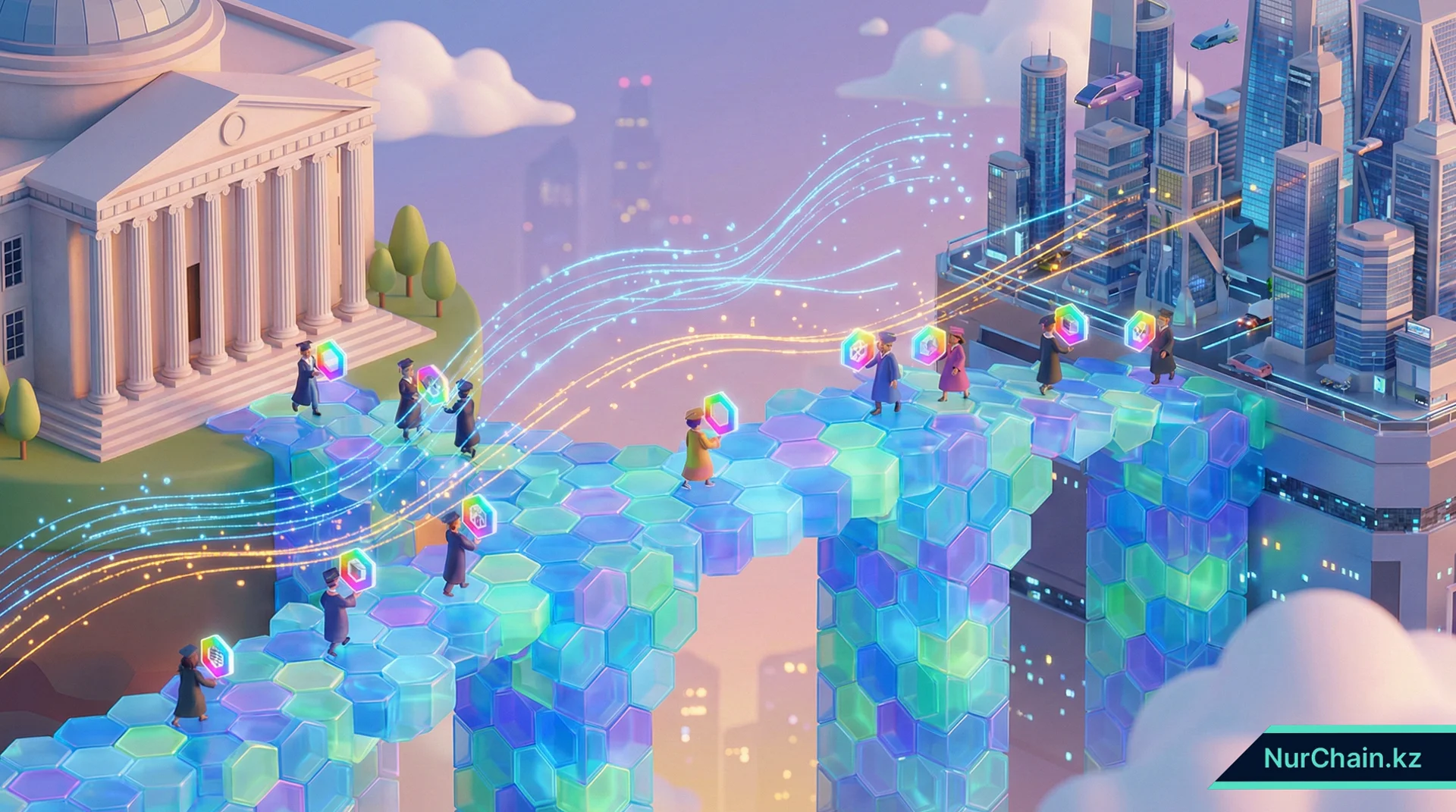
Does graduation feel more like a "goodbye" than a "see you later"? For years, once you framed that paper diploma and tossed your cap, the connection to your university often just... faded away. But what if we transformed that static piece of paper into a dynamic, lifelong connection?
By utilizing digital credentials for alumni engagement , institutions finally bridge that gap. These are essentially electronic proof of your skills and achievements. It's time to move beyond outdated paper systems and embrace the environmental benefits of moving from paper to digital diplomas. Instead, let’s adopt NFT diplomas and blockchain technology . These unique digital certificates and secure ledgers respond strategically to the challenges of modern verification. Here is the thing: we aren't just talking about cool tech. We are looking at how these secure, verifiable credentials revolutionize the way schools track graduate success. They also boost career mobility with 99% faster verification. The main takeaway? This builds a future-proof academic ecosystem. It’s especially exciting to see Kazakhstan leading this digital charge on a national scale.
For decades, graduation has felt like a bittersweet "goodbye." You walk across that stage, frame your paper diploma, and then-sadly-the connection to your university often starts to fade. But what if we changed that dynamic entirely? What if graduation actually started a "live link" (a continuous, real-time connection) that never goes cold? By shifting to an NFT diploma -a unique digital certificate (a non-fungible token representing a specific qualification) powered by blockchain (a secure, decentralized digital ledger)-schools turn those static pieces of paper into dynamic digital assets. This isn't just a passing tech trend; it is a massive shift in how we value education, especially with the global digital credential market expected to grow at a CAGR of 15.5% through 2028 (the mean annual growth rate of an investment over a specified period of time longer than one year). By utilizing digital credentials for alumni engagement, universities maintain a relevant, helpful presence in your professional life. You might wonder, what are the benefits of blockchain for university degrees? Beyond sheer security, it’s about creating a portable, permanent legacy for every student.
🎓 Enhancing the lifelong relationship with graduates is a core pillar of the Strategic Benefits of NFT Diplomas for Universities in Kazakhstan framework.
How NFT Diplomas Transform Graduation into a Lifelong Connection
At the heart of this digital change is Self-Sovereign Identity (SSI) . This model gives you full control over your digital identity. In the old, centralized system, if you needed to prove you graduated, you had to ask the university to vouch for you. You were just a "subject" in their database. Now, we’re flipping the script. We are empowering you to be a "data owner" who manages your own information. This shift toward self-sovereign identity in education ensures that you, not the institution, hold the keys to your future success.
It’s why NFT diplomas blockchain technology is becoming the new gold standard for verifiable credentials for graduates who want to own their accomplishments fully. What does this mean? Trust is built directly into the record itself. It is also a powerful weapon against the $22 billion global academic fraud market. It plays a key role in combating fake degrees in Central Asia because these records are unchangeable and unhackable. To keep everything secure, these credentials follow W3C standards for Verifiable Credentials . This ensures long-term data security and validity. What are the W3C standards for verifiable credentials? They are essentially a universal language that allows different systems to talk to each other securely through cryptographic verification.
When you receive your credential, it sits safely in your own Digital Wallet . This is where things get interesting: the university stays top-of-mind every time you share an achievement. Right now, over 700,000 students around the world already use blockchain wallets for their records. Unlike a dusty, static PDF, you can "stack" these credentials with micro-credentials as you continue to learn throughout your life. It is a perfect fit for a future where the micro-credential market is expected to hit $48 billion by 2030. We are already seeing the impact-early projects show a 20% increase in registrations on alumni platforms. How do NFT diplomas improve alumni engagement? The answer lies in constant utility; when a degree is useful every day, the school remains part of your daily success story. This is the true power of blockchain in higher education .
Why It Matters: Moving to digital credentials isn't just about the technology; it’s about changing the relationship from a one-time transaction into a lifelong partnership. It ensures that the value of your degree grows right along with you.

Driving Higher Alumni Activity Through Instant Verification and Social Sharing
Have you ever tried verifying a degree for a job application? Usually, it’s a mess of emails, phone calls, and weeks of waiting. Digital credentials completely remove this verification friction . What used to take half a month is now instant and cryptographic. This streamlined process is a cornerstone of modern digital diploma verification , ensuring that employers get the data they need without the headache. How does blockchain simplify degree verification for employers? It provides a 'one-click' trust button that bypasses traditional, slow-moving background checks. The bottom line? We are reducing verification wait times by a staggering 99%, all while meeting global standards for data portability championed by the Groningen Declaration Network (GDN).
This has an immediate, positive impact on your career. Research shows that 73.9% of graduates find digital credentials incredibly useful during job interviews. The data from LinkedIn is even more compelling: profiles with verified certifications get up to 6x more profile views than those using simple text. By giving you a one-click sharing option for platforms like LinkedIn, the university turns every alumnus into a high-impact brand ambassador. Mastering LinkedIn certificate sharing means your profile stays updated with zero effort, making you visible to recruiters instantly. These digital badges have a social share rate of nearly 10%, which is significantly higher than traditional certificate uploads. This isn't just about vanity; it's a key part of academic fraud prevention, as employers can see the 'verified' checkmark next to your name. How do you prevent academic fraud with digital credentials? The secret is in the unforgeable digital signature attached to every file.
Beyond the career boost, there is a massive win for reducing university administrative costs in the back office. Automating the verification process can slash the workload for a Registrar’s Office by up to 90% . The efficiency gains from Registrar’s Office automation allow staff to focus on student success rather than shuffling papers. We’ve seen this happen firsthand at schools that moved away from manual transcripts to automated blockchain issuance. By using Open Badges 3.0 standards, these diplomas become portable assets in a global EdTech ecosystem currently attracting $16 billion in annual investment.
Quick Insight: When you make it easy for alumni to show off their hard work, they do it more often. Every time they share a verified badge, they provide a high-trust testimonial for the institution, which helps in boosting international university rankings.

Precision Alumni Tracking Through Blockchain Data Insights
One of the biggest challenges for any school is knowing where their graduates actually end up. In the past, you had to send out endless surveys that most people simply ignore. Now, you can use real-time analytics dashboards , leveraging data analytics from NFT diploma usage to see exactly how and where credentials are being verified. The micro-credentials market growth is a clear signal that the world is moving toward continuous, bite-sized learning. To stay ahead, schools are turning to blockchain alumni tracking to see which skills actually translate into career success. This provides incredible data on career mobility-the way employees move across roles and locations-which is vital since employers are now 40% more likely to hire candidates who can prove their skills digitally.
Innovation doesn't stop at diplomas. NFT-based alumni cards are changing how campus events work right now. Instead of paper lists, seamless digital check-ins provide a real-world "touchpoint" for your graduates. This shift has led to a 32% increase in event engagement for schools that embrace digital-first strategies. These insights help you find "lost" alumni who might be working globally but haven't checked in for years. That is a massive opportunity, considering there is $1.1 trillion in potential lifelong value sitting in global alumni networks.
Tracking these interactions also helps you prove your Return on Investment (ROI) . By seeing how credentials connect with career moves, universities have found that graduates with verifiable digital credentials see a 25% faster path to promotion. To keep all this data safe, advanced systems use AI-based anomaly detection-using AI to spot suspicious patterns-to ensure 100% integrity. This helps you stay GDPR and SOC2 compliant while maintaining a single, reliable "source of truth" for your database. You might ask: what is the ROI of digital credentialing for universities? When you can prove your graduates get promoted faster, that ROI becomes a powerful marketing tool for future recruitment and gaining a competitive advantage in the market.
Takeaway: Data shouldn't be a mystery. By using blockchain insights , your institution can stop guessing about alumni success and start measuring the real-world impact of your programs in real time.

Strengthening the Academic Ecosystem in Kazakhstan
Kazakhstan is rapidly emerging as a leader in this digital revolution. The Ministry of Science and Higher Education has already launched blockchain programs for over 100 local universities. This strategic move, part of the "Concept for the Development of Higher Education and Science 2023-2029," aims to digitize the nation’s entire academic record system. The goal? To turn the country into a regional powerhouse within a Central Asian EdTech market growing by 20% annually . So, how exactly is Kazakhstan implementing blockchain in higher education? It’s building a robust EdTech infrastructure to ensure every student has a digital-first experience while attracting international students to Kazakhstan.
National projects like KazSmartChain provide the heavy-duty infrastructure needed for secure diploma issuance. This aligns perfectly with the targets set in the "Digital Kazakhstan" roadmap. By understanding how NFT diplomas align with Digital Kazakhstan program KPIs, the nation is effectively future-proofing its workforce for a global economy. Meanwhile, Nazarbayev University’s Blockchain & Fintech Lab acts as a vital testing ground for projects that connect digital credentials to the labor market's actual needs. This matters because 85% of local employers now prioritize digital literacy and verified certifications when they hire.
Shifting to digital is a smart economic move that fuels the country’s socioeconomic growth. It creates a transparent, fraud-proof labor market for everyone involved. By cutting out manual document checks, the region can slash 15-20% of the overhead costs typically tied to verification. Most importantly, these standardized credentials provide instant global verification for Kazakhstani graduates, giving them true global mobility . Whether your graduates end up in Almaty or Silicon Valley, employers will trust their qualifications instantly. This bridges the "trust gap" in an international market where 50% of recruiters now rely on automated tools to find top talent.
Did You Know? Kazakhstan's proactive stance on blockchain means its graduates enter the workforce with a technological advantage that major international employers recognize from day one.

Summary: Transforming Graduation into a Lifelong Digital Partnership
Moving from traditional paper diplomas to blockchain-powered digital credentials is about more than just going paperless. It represents a fundamental shift in the relationship between your school and your graduates. What this really means is that we're moving away from an old, centralized model. Instead, we are moving toward Self-Sovereign Identity . In simple terms, this is a model where individuals have full control over their own data. The graduate-not the school-becomes the true "data owner" of their accomplishments.
By adopting W3C standards for Verifiable Credentials , you ensure these qualifications get the global recognition they deserve. These are global technical specifications for secure digital proofs that are also tamper-proof. Why does this matter? It’s a vital defense against the $22 billion global academic fraud market where people use fake degrees or records. But the benefits go beyond security. This technical foundation keeps your university at the heart of a graduate's professional life through digital wallets and easy social sharing. In fact, this can increase LinkedIn profile visibility by up to six times. That's a huge win for both the student and your school's reputation.
The bottom line? These advancements solve the massive problem of "verification friction"-the delays and costs of checking credentials. By cutting wait times for employers by 99%, you make the entire system faster. It also slashes the administrative workload in your Registrar’s Office by up to 90%. For the university, this translates into precision alumni tracking . It turns guesswork into real-time, data-driven insights that prove the true value of the education you provide.
This transformation is already taking root, most notably in Kazakhstan. This is thanks to the "Digital Kazakhstan" roadmap and national blockchain initiatives. The country is creating a transparent, mobile workforce ready for the global stage. Ultimately, digital credentials turn graduation from a one-time transaction into a lifelong partnership. As an alumnus moves through their career, the value and prestige of your institution grow right along with them.
🧠 Deep Dive: Now that you understand how digital credentials maintain the alumni connection, learn how to transform that connectivity into actionable institutional intelligence. Explore the methods for Leveraging Data Analytics from NFT Diploma Usage.
