How to Verify an NFT Diploma in Under 30 Seconds (Step-by-Step)
 Author:
 Reading time:
11 min
Reading time:
11 min
 Difficulty:
Easy
Difficulty:
Easy
Have you ever wondered if verifying a professional degree could finally be simple? Imagine it being as easy as scanning a digital menu at your favorite restaurant. For years, checking a candidate's credentials felt like a slow, bureaucratic slog. It was a tedious chore of endless phone calls and physical mail. The old way caused a massive headache for everyone involved. But things are finally changing. The digital transformation of academia has flipped the script. We've entered an era where QR code diploma verification makes the process instant. This method uses a Quick Response code to authenticate a degree . It keeps the procedure secure and incredibly user-friendly.
This shift isn't just a passing tech trend. It's a strategic response to the booming blockchain in education market . Experts expect this market to hit $3.07 billion by 2030 . What's driving this growth? We're seeing a massive move toward secure, portable, and verifiable credentials. These digital certificates stay tamper-proof and move easily between different platforms. They're records you can actually trust. Whether you're a student or an employer looking for digital verification, you're in the right place. Maybe you need to hire at lightning speed. Or maybe you want to prove your hard-earned skills. Either way, we've built this clear, step-by-step guide for you. We'll help you master this new digital landscape. We'll walk you through using direct links. You'll learn how to verify institutions via smart contract addresses. These unique identifiers represent programs running on a blockchain. We'll even help you troubleshoot those annoying common errors. Our goal is simple: we want you to maintain 100% academic record integrity every single time. This gives you the assurance that your educational data remains accurate and untouched.
📘 This practical walkthrough serves as the operational heart of the Employers Guide to Verifying NFT Diplomas, turning the theory of digital trust into a 30-second reality for Kazakhstani recruiters.
Instant Verification via Direct Links and QR Codes
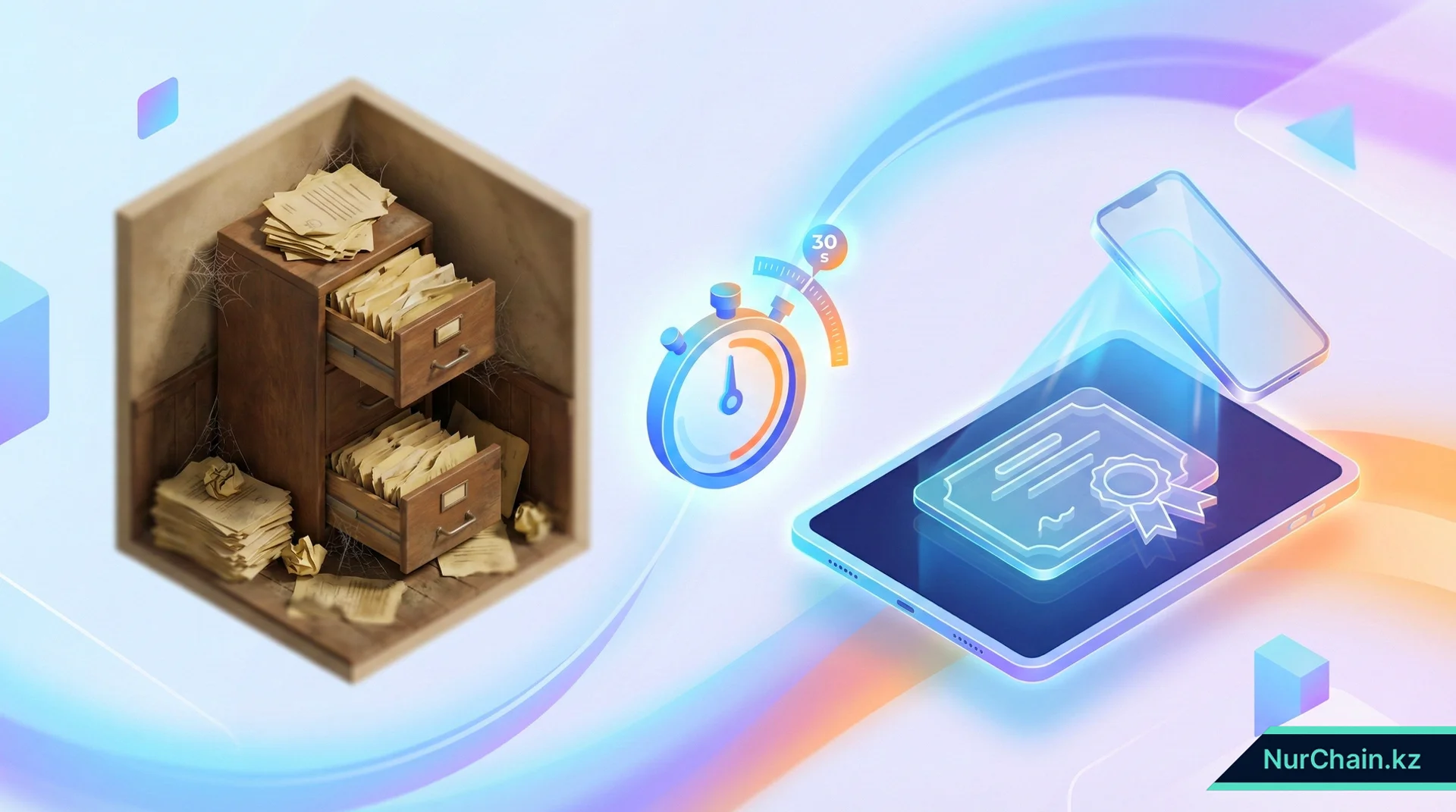
Have you ever wondered if verifying a degree could be as simple as scanning a menu at your favorite restaurant? Thanks to the digital transformation of academia, we are finally reaching that point. Modern NFT diplomas are designed specifically for speed, typically featuring a unique verification URL or a QR code right on the certificate. This makes QR code diploma verification the fastest way to confirm a candidate's credentials during an interview. This isn't just a passing trend; it is a massive shift in a blockchain in education market that is projected to reach $3.07 billion by 2030. According to Grand View Research, the rising demand for secure, portable, and verifiable credentials is a primary driver of this 20%+ compound annual growth rate (CAGR) within the educational technology sector.
Point your smartphone camera or a dedicated scanner at the code to verify a credential. This action triggers an automated redirect to an official verification portal for digital credential verification . Behind the scenes, the technology is incredibly efficient: blockchain throughput can reach 47 transactions per second, with average latencies as low as 4.32 seconds. If you are looking at a digital portfolio or a CV, you might simply see a direct link. Clicking that URL opens the specific record in a browser, where cryptographic signatures ensure 100% data integrity. Because this system maintains high academic record integrity, you never have to worry about the information being tampered with after the fact.
The real beauty of this process is that it is instantaneous. How long does it take to verify an NFT diploma? The answer is: significantly less time than it takes to pour a cup of coffee. The system performs a cryptographic check against the digital ledger to confirm the record exists and has not been tampered with. This is a total game-changer for employers-especially when they integrate NFT diploma verification into HR ATS systems-since institutions report that manual misconduct investigations are costly. While traditional background checks can drag on for 7 to 14 business days, this NFT-based method delivers a "Verified" status in less than 10 seconds. By cutting out the middleman, companies can see up to 80% cost reductions in their screening processes. Gartner's recent report on emerging technologies in Human Resources notes that the move toward digital, blockchain-based credentials addresses the critical need for trust in a globalized workforce.
Quick Insight: Think of a QR code on a diploma as a digital "fast pass." Instead of waiting weeks for a registrar to mail back a confirmation, you are getting the same level of authority in the time it takes to send a text message.

Verifying the Issuing Institution on the Blockchain
Anyone can slap a "Verified" badge on a screen, but how do you know the university actually issued it? If you're an HR officer, this step is absolutely crucial. To prove a diploma is the real deal, you need to check that the Contract Address (the smart contract's location) or the Wallet Address (the digital transaction destination) matches the school's official records. You'll usually find the university's official wallet address on their website under the registrar or digital credentials page. Taking this extra precaution matters because fraud is real-recent benchmarks show a staggering $12.5 billion in reported losses , making people ask: can NFT diplomas be faked?
When you use a blockchain explorer like Etherscan or the specialized eGAB Chain to search through transactions, look for a "Verified" badge or the school's official name. These platforms use decentralized ledger technology (DLT) to make faking credentials mathematically impossible by spreading data across many locations. Don't forget to check the transaction timestamp . It reveals exactly when the school issued the degree, creating an unchangeable record that should match the graduation date. This simple check stops "backdating"-a classic trick in the $22 billion counterfeit diploma market -and shifts the whole blockchain vs apostille conversation.
Don't forget to verify the recipient address. This step confirms the university sent the NFT directly to the candidate’s personal digital wallet. This model, known as self-sovereign identity (SSI), gives students total control over their own records without relying on a central authority. It solves the riddle of why use blockchain for academic credentials while letting students choose what data employers can see through privacy settings. You're giving power back to the individual while keeping institutional trust rock-solid. Banks are already on board, with 90% of US and European institutions exploring this security for their own records. For universities, this "single source of truth" is a massive relief, cutting administrative overhead costs by an estimated 20%. If a student asks how to verify a blockchain degree or how to tell if an NFT degree is authentic, tell them to check the smart contract address against public records. Research from the World Economic Forum shows that decentralized identifiers (DIDs) provide the framework needed for personal data sovereignty and institutional accountability. If you need to verify international NFT degrees, you'll find this transparency offers a level of fraud prevention that paper just can't touch.
Why It Matters: Think of the university’s contract address as a digital wax seal. If the address doesn't match the one on the school's official site, don't trust the document-no matter how "official" it looks.

Troubleshooting and Common Verification Errors
Even the best technology has a "hiccup" now and then. If you run into a "Record Not Found" error, don't panic; it doesn't necessarily mean the diploma is fake. First, make sure you're using the official verification portal of the issuing body. Using a generic NFT marketplace might not work because they often lack the specialized metadata (ERC-721, ERC-1155) required for academic standards. Many people ask, " What are the common errors when verifying a blockchain certificate? " Often, it simply comes down to checking the wrong chain or an outdated link.
You might also be looking on the wrong network. Make sure the network-whether it's Ethereum, Polygon , or a private academic chain-matches exactly what the certificate specifies. In a market growing at a CAGR of 30.4% , digital records can take many different "roads." Also, stay alert for "spoofed" NFTs, which are fake tokens designed to look like they came from a legitimate source. You might wonder, can NFT diplomas be faked or spoofed? While the NFT itself is secure, scammers create "lookalikes," so you must always verify NFT diploma authenticity by checking the creator's address. To protect yourself, always cross-reference the sender’s blockchain address with the authorized list on the university’s official .edu or .gov website. This is more important than ever, as AI-generated fraud is currently tripling annually.
If you want to see the actual image of the diploma, make sure your viewer handles the NFT standard so you can access the IPFS (InterPlanetary File System) hash where the file lives. If you're unsure how to check a diploma on Etherscan , simply paste the transaction hash (TxID) into the search bar. If a link ever seems broken, don't worry. You can use the transaction hash (TxID) provided on the diploma to manually look up the record on a public block explorer. This ensures digital portfolio verification remains possible at any time. Because the blockchain is permanent, the record will exist there even if the university's main website happens to be temporarily offline, upholding the principles of data sovereignty for the student. If you encounter an NFT certificate verification error, check that the token ID and contract address match the physical or digital copy exactly.
Takeaway: Always double-check the URL. A common tactic for scammers is to create a verification page that looks official but is hosted on a slightly misspelled domain. When in doubt, go directly to the university's main homepage and navigate to their registrar or digital credentials section from there.

Summary: Mastering Instant Credential Trust in the Blockchain Era
Moving toward NFT-based credentials represents a fundamental shift in how we value achievement. We are swapping "trusting a piece of paper" for trusting the math behind the technology itself. Blockchain already transforms the classroom by solving age-old problems like fraud and general inefficiency, as seen in recent case studies of companies using digital verification.
New systems offer incredible speed, even for high-volume tasks like batch verification for mass hiring. You get instant verification via direct links and QR codes , allowing you to bypass the traditional registrar's office entirely. Employers can now confirm qualifications in under 30 seconds because the system uses cryptographic signatures to prove a document is authentic. This ensures 100% data integrity and acts as a powerful deterrent against the $22 billion global counterfeit diploma market.
Technology is only as good as its source, which is why verifying the issuing institution on the blockchain is your critical second pillar. Cross-reference Contract Addresses and Wallet Addresses against a university's official records to be certain a credential is the real deal. This system fosters self-sovereign identity (SSI) , giving you full control and total ownership over your own records while the university remains accountable for what they issue.
You can easily handle minor technical "hiccups" if you know the right tools. Learn to navigate blockchain explorers to view transactions and spot "spoofed" NFTs designed to look authentic. These tools form your essential digital toolkit, addressing the top frequently asked questions for HR directors. Together, they build a global "single source of truth" that protects students, empowers employers, and restores ultimate trust to academic achievements.
🚀 Ready to scale? Now that you have mastered manual verification, move from individual checks to systemic automation. Learn How to Integrate NFT Diploma Verification into HR ATS Systems to streamline your recruitment pipeline.
