Inside the Diploma "Black Market" in Central Asia (and How to Stop It)
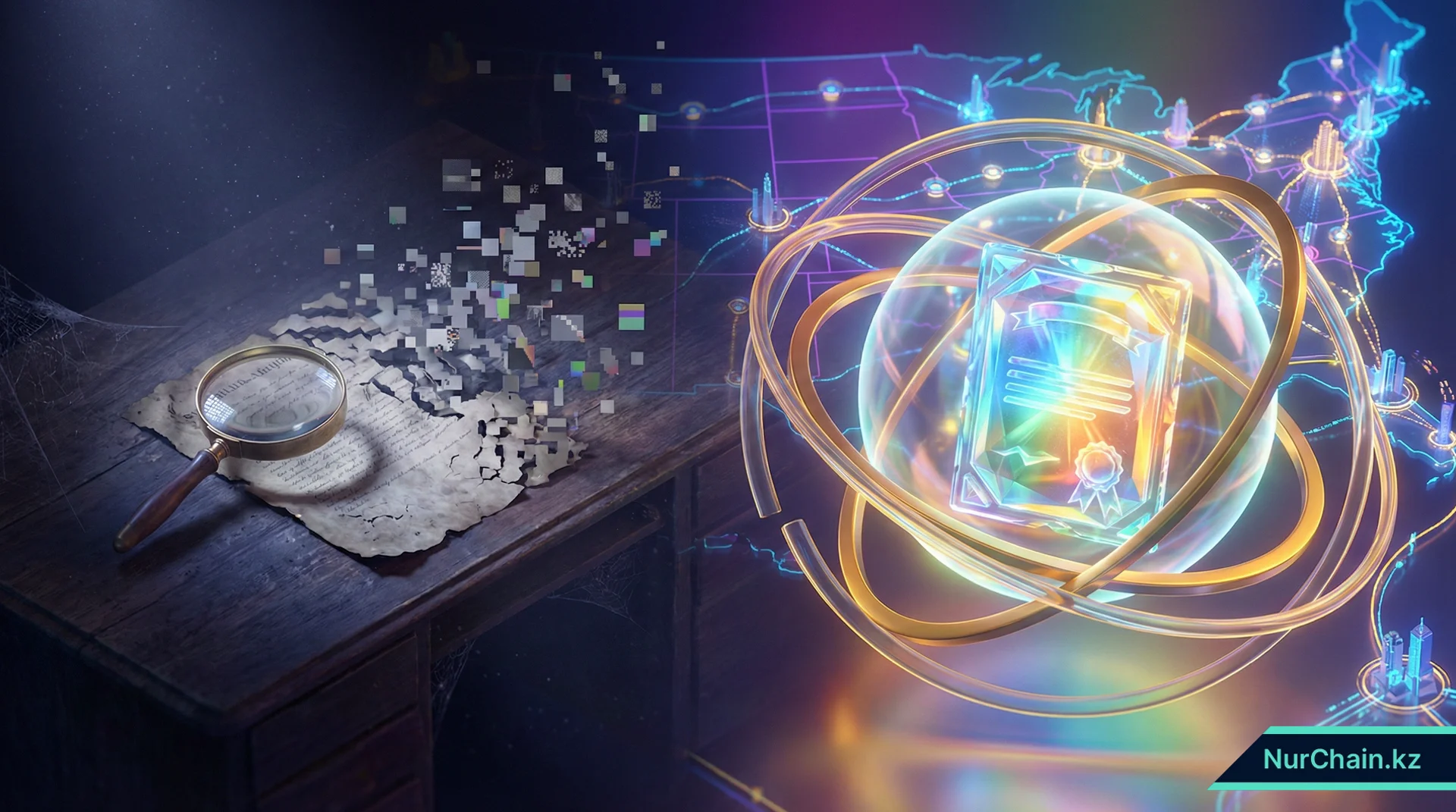
 Author:
 Reading time:
13 min
Reading time:
13 min
 Difficulty:
Easy
Difficulty:
Easy
Have you ever scrutinized a new hire’s degree? You might have wondered if it truly represents the real deal. To be completely fair, asking that has become a very practical question to consider. The scale of diploma fraud Central Asia is currently facing is quite frankly mind-boggling. We aren't just talking about a few harmless white lies on a resume anymore. Academic fraud has evolved into a sophisticated, $21 billion global industry. Today, tech-savvy scammers are even using AI. They create "perfect" physical fakes that can fool almost anyone.
This sharp rise in document forgery Central Asia is dealing with is a problem. It does far more than just create annoying paperwork headaches. It actively threatens to undermine all the hard work that genuine students put in. It also significantly devalues the region's entire workforce. It’s a massive systemic challenge. This is especially true when you consider the statistics on digital deception. It now accounts for over 55% of all reported fraud in countries like Kazakhstan. In this article, we’re going to dive deep into this world. We'll look at exactly how this academic "black market" actually works. Why are the old, manual ways of checking degrees failing the modern workforce? We'll explore that and look at some cool new tech. This includes NFT diplomas (unique digital certificates) and blockchain in EdTech . These technologies are building an unforgeable digital shield. The goal is to bring trust back to our schools and workplaces.
🛡️ Understanding the mechanics of the academic black market provides the necessary urgency for the defensive strategies explored in our Blockchain Security in Education master guide.
The Scale and Mechanics of Academic Fraud in Central Asia
Have you ever looked at a new hire’s degree and wondered if it’s truly the real deal? In Central Asia, that's a very fair and pragmatic question to ask. The scale of diploma fraud Central Asia faces today is truly mind-boggling. Unfortunately, academic fraud has evolved into a sophisticated, high-tech industry. You might wonder, how common is academic fraud in Central Asia? With thousands of cases reported annually, it has become a systemic issue. This rise in document forgery threatens to undermine the hard work of genuine students. UNESCO research (IIEP) indicates that academic corruption and the spread of "diploma mills" significantly stall socio-economic development in emerging markets by devaluing legitimate human capital. If we look closely at the numbers, the situation is urgent: in the first half of 2025, online fraud in Kazakhstan jumped by 25%, with 12,390 specific cases on record. Digital deception now accounts for over 55% of all reported fraud in the country.
Here is the thing: this "black market" isn't always run by hackers hiding in dark basements. Sometimes, the problem originates directly from the inside. A perfect example surfaced in late 2025 when the director of the West Kazakhstan Industrial College was investigated for a scheme that sounds like it's straight out of a movie. The West Kazakhstan Industrial College scandal served as a wake-up call, showing how easily institutional vulnerabilities are exploited. By enrolling 54 fake students, the director allegedly funneled over 49 million tenge-more than $108,000-in scholarship money. This kind of fraud only occurs because so many schools still rely on manual records that are far too easy to manipulate.
On a global scale, the numbers are even more eye-opening. We're looking at a fraud ecosystem worth approximately $21 billion, with diploma mills bringing in around $7 billion every year. These groups thrive because they know exactly how slow and outdated the old verification systems are. In our region, forgery networks have become incredibly proficient. They will sell you a fake degree for anywhere from $1,300 to $4,000, using AI to replicate holograms and watermarks so perfectly they appear identical to the original.
Did You Know? The rise of AI doesn't just help us write better emails; it gives forgers the tools to create "perfect" physical fakes that fool even the most experienced HR professionals. This is exactly why moving toward long-term cryptographic security is now essential.

Why Traditional Verification Fails the Modern Workforce
If you've ever had to double-check a candidate's background, you already know it’s a total bottleneck. We should prioritize the verification of academic credentials, yet we often find ourselves stuck in the past. Even with new advancements-like the November 2025 agreement between Kazakhstan, Uzbekistan, Kyrgyzstan, and Tajikistan to recognize each other's degrees-the bureaucracy still moves at a snail's pace. For older documents, you are still looking at 35 to 45 working days for manual processing. The reason why? It often comes down to fragmented paper archives and slow institutional responses. In a fast-paced business world, waiting over a month to confirm a hire is simply not sustainable.
| Verification Factor | Traditional Manual Process | Modern Digital Requirement | | --- | --- | --- | | Verification Time | 35–45 Working Days | Near-Instantaneous | | Reliability | Susceptible to Human Error | Cryptographically Secure | | Accessibility | Requires Physical Paperwork | Digital Wallet Access |
Current digital tools are a good start, but they have significant gaps. The icdv.kz verification system has become a cornerstone of local efforts, though it has limitations we must address. While it's Kazakhstan’s primary tool, it mostly covers records from the 2020–2021 school year onwards. This leaves millions of older graduates in a "verification gap." If you graduated before 2020, your data must be manually digitized-a process that takes about 5 business days if everything goes perfectly. Many recruiters still wonder how to verify a degree from Kazakhstan when the records fall outside this narrow digital window.
As a result, employers face a genuine crisis of trust. A January 2025 survey found that 44% of applicants admit to lying during the hiring process. This kind of resume fraud costs businesses worldwide about $600 billion every year . What is the cost of resume fraud for your business? It’s not just the money; it’s the damage to your company culture and quality of service. When you hire the wrong person because of a fake degree, the financial impact is real. This increased cost of bad hires puts a massive strain on growing companies. Data from the Society for Human Resource Management (SHRM) indicates that the total cost of a bad hire can reach five times the employee's annual salary when you factor in recruitment, training, and lost productivity. Replacing an unqualified individual can cost anywhere from $17,000 for entry-level positions to a massive $240,000 for leadership roles. Don't forget the risk of "insider threats"-a vulnerability highlighted in edtech data breach case studies-where people with administrative access can quietly alter records in central databases.
Why It Matters: Traditional paper diplomas are essentially "offline" data in an online world. Every day your business relies on manual checks is another day you remain vulnerable to expensive hiring mistakes and data tampering.

How NFTs Act as an Unforgeable Digital Shield
So, how do we actually fix this? The answer lies in the same technology that took the art world by storm: Non-Fungible Tokens (NFTs). You might be asking: what are NFT diplomas and how do they work? Simply put, they turn a static record into a dynamic, verifiable digital asset. The rollout of NFT diplomas Kazakhstan is witnessing right now marks a major milestone in educational technology. Narxoz University is leading the way as the first institution in Central Asia to start issuing these digital degrees. These Narxoz University NFT degrees provide a level of security that was previously impossible to reach. Since Narxoz has FIBAA accreditation (a quality seal for excellence in higher education), these digital degrees aren't just a local experiment-they are respected across the EU, the US, and China.
When a university converts a diploma into an NFT, it becomes a one-of-a-kind digital asset that nobody can alter. Unlike a PDF or a scan, an NFT is impossible to duplicate or forge thanks to blockchain immutability. The blockchain acts as a decentralized trust layer, keeping your data transparent yet private. This leads us to something called Self-Sovereign Identity (SSI) (the concept that individuals should own and control their personal data). But what is Self-Sovereign Identity in higher education? It is the idea that you, the student, are the ultimate owner of your achievements, not the institution. The implementation (the act of putting a plan into action) of these systems aligns with the World Wide Web Consortium (W3C) standards for Verifiable Credentials (digital proofs of identity that can be checked instantly), ensuring that digital identities are interoperable (able to work across different systems) and cryptographically proven without the need for a central intermediary (a middleman like a bank or government office). Instead of your graduation info sitting on a university server, choosing secure on-chain storage allows you to own it in your own Digital Wallet. Using a digital wallet for diplomas lets you carry your entire academic history in your pocket, ready for instant verification. You hold the "key," and by learning how to avoid nft diploma phishing scams, you can provide employers with instant, secure access to your credentials whenever necessary.
This isn't just a passing trend-it is where education is heading. The global Blockchain in EdTech (education technology) market is expected to grow by about 24.9% annually through 2032. This is happening because we desperately need tamper-proof containers for our life's achievements. By moving to the blockchain, we ensure that a degree you earned can never be questioned or stolen.
Takeaway: Think of an NFT diploma like a digital wax seal that cannot be broken. It gives the power of data back to the student while providing employers with 100% peace of mind .

Blockchain Solutions: Building a Fraud-Proof Future in Kazakhstan
Kazakhstan is building a path forward that leaves no room for fraudsters. This move toward a robust academic integrity blockchain ensures that trust is built into the very foundation of your schools. By establishing an Academic Integrity Verification System (AIVS) and following best practices for private key security, you can use technologies like SHA3-512 hashing and Merkle Trees. While these might sound like complicated technical terms, they are simply mathematical tools that guarantee authenticity. How does blockchain prevent diploma forgery? By distributing the record across a network, the system removes any single point of failure and stops anyone from sneaking in a fake entry. These tools make the chances of someone successfully faking a digital record effectively zero.
The benefits for your university are immediate. Schools that adopt these cryptographic tools-essentially math codes that secure information-can save up to 20% on administrative costs . The reason is simple: you swap out weeks of manual paperwork and phone calls for instant digital confirmation. It is faster, safer, and significantly more cost-effective over time.
Kazakhstan is in a prime position to lead this change. By late 2025, 92% of digital signatures through eGov.kz were issued online. The widespread use of these signatures shows that the infrastructure for compliance with Kazakhstan’s cybersecurity laws is already here. By connecting audited smart contracts to this existing setup, the country can bridge the gap between official ID and academic achievement. This integration promotes the interoperability of digital IDs , making it easy for different government and educational platforms to talk to one another. Following the lead of pioneers like MIT, adopting these decentralized ledgers -shared record books that no single person controls-will ensure Kazakhstani degrees are trusted globally. This isn't just about stopping fraud; it is about protecting the country's most important asset-its people-and ensuring your graduates are respected wherever they go.
Quick Insight: Digital transformation isn't just about eliminating paper; it's about building trust directly into the code. Linking academic records with eGov.kz is the final step in making the diploma "black market" a thing of the past.

Summary: Securing Academic Integrity Through Digital Innovation
The "black market" for diplomas in Central Asia has reached a breaking point. What started as simple forgeries has evolved into a sophisticated high-tech ecosystem. This trend devalues legitimate education and drains billions from businesses. The scale of academic fraud Central Asia currently faces is staggering. "Diploma mills"-unaccredited companies selling fake degrees-fuel much of this growth. High-profile institutional failures, such as the West Kazakhstan Industrial College scandal, only add fuel to the fire.
Outdated, manual verification processes are the primary reason these issues persist. They are simply too slow and fragmented for today’s fast-paced digital world. Employers often find themselves waiting over a month for a response. All they want is to confirm a candidate actually graduated. While local tools like icdv.kz are a strong start, a massive "verification gap" still exists for older graduates. Consider the skyrocketing cost of a bad hire. A robust, modern solution isn't just a luxury anymore; it's a requirement for a stable economy.
The good news? We are finally paving the way toward a fraud-proof future. This shift is happening through NFT diplomas and blockchain technology. Institutions like Narxoz University are already leading the charge. They are transforming static paper degrees into dynamic digital assets. This movement drives us toward Self-Sovereign Identity (SSI) , a model where you have full control over your digital identity and data. What this means for you is straightforward: you can keep your credentials in a digital wallet. Your achievements become portable, instantly verifiable, and cryptographically secure. Kazakhstan has a real chance to dismantle the forgery industry for good by plugging these blockchain solutions into systems like eGov.kz. Ultimately, this is about more than just cutting down on paperwork. Moving toward an academic integrity blockchain builds a global foundation of trust. It ensures your hard-earned skills get the respect they deserve, from Central Asia to the rest of the world.
🚀 The path to a solution: You’ve seen how forgers exploit paper records. Now, discover the core technical property that makes blockchain records impossible to tamper with by exploring Blockchain Immutability and Its Impact.
