Are DAO Universities the Future of Decentralized Education?
 Author:
 Reading time:
14 min
Reading time:
14 min
 Difficulty:
Easy
Difficulty:
Easy
- How Do DAOs Redefine University Governance and Decision-Making?
- Why Is the "Student-as-Owner" Model a Paradigm Shift?
- Can Decentralized Accreditation Replace Traditional Degrees?
- What Are the Real-World Challenges to DAO Implementation in Education?
- Summary: Decentralizing the Ivory Tower through Transparency and Ownership
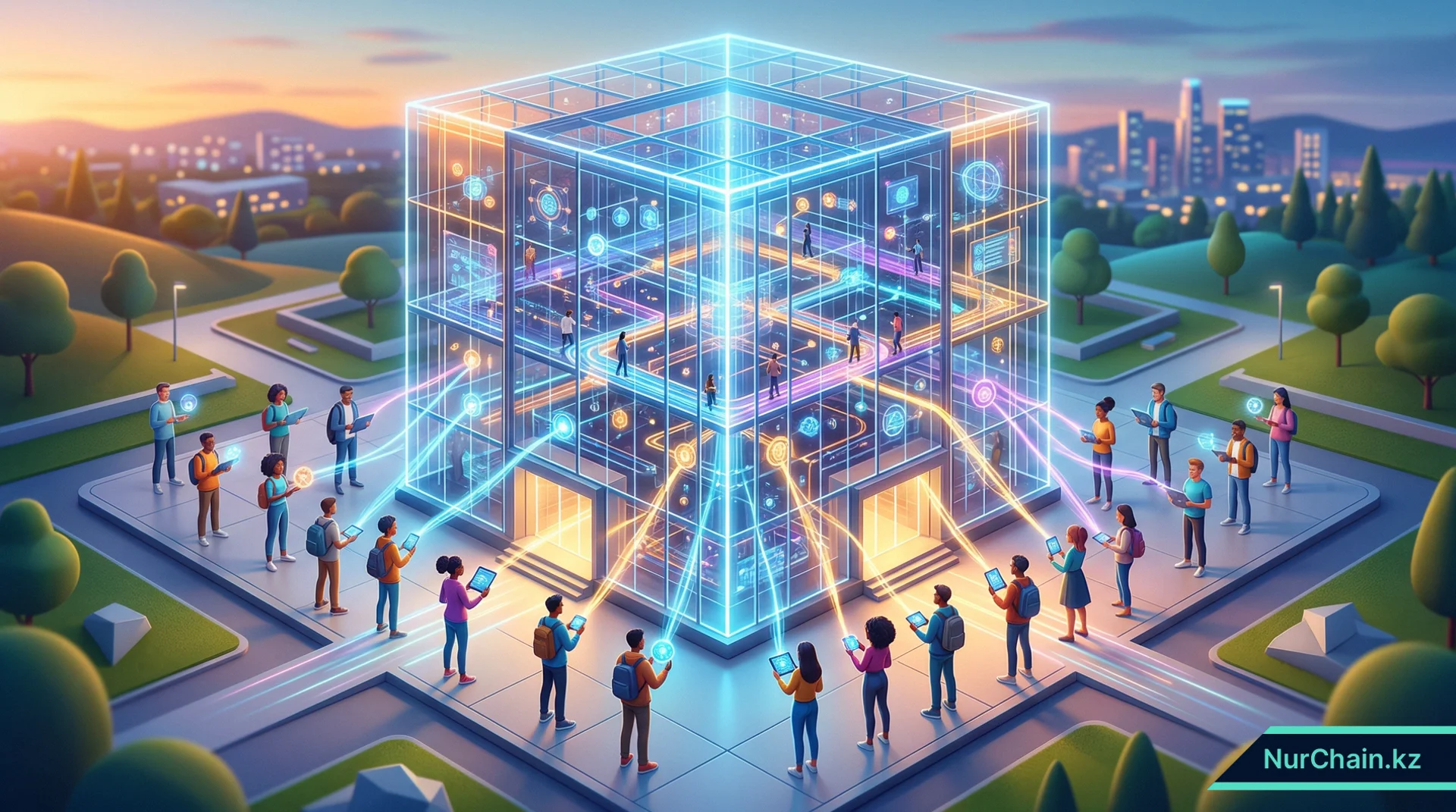
Have you ever felt like your university is a bit of a "black box"? Essentially, this means the inner workings stay hidden from view, leading to a common and relatable frustration. You likely feel that major decisions happen in secret boardrooms, situated miles away from the students they actually affect. It is undeniably tough feeling like a passive customer when your institution is supposed to be your vibrant community. But what if we could flip the script? The reason why? We can finally replace those old-school hierarchies and traditional top-down management structures. Imagine a system where you actually have a real say in how things are run. This is where DAO Universities -higher education institutions led by Decentralized Autonomous Organizations-enter the picture. Think of them as a strategic response to traditional gatekeepers who control access to resources. These universities use blockchain-based governance and smart contracts (self-executing digital agreements) to create a transparent, community-led learning environment. This marks a profound shift: you stop being just a student and become a true stakeholder. You gain a vested interest in your own academic journey. In this article, we’ll explore how these decentralized entities work and look at the revolutionary "student-as-owner" model. We will also cover on-chain accreditation, the process of certifying learning on a blockchain. Finally, we'll talk about the real legal and technical hurdles we must clear to make decentralized education a reality.
Have you ever wondered why university decisions often feel like they’re made in a secret boardroom, miles away from the students they actually affect? It's a frustration many of us share today. While traditional education usually follows a rigid "Board of Regents" model, Decentralized Autonomous Organizations (DAOs) are now completely flipping the script. As the Gartner Hype Cycle for Education highlights, decentralized identity and blockchain-based governance are maturing into a viable infrastructure. This foundation effectively replaces centralized gatekeepers with transparent protocols. Essentially, instead of relying on just a few individuals at the top, a DAO uses smart contracts to automate routine administrative tasks. This ensures that rules are followed by everyone, every single time. This isn't just a niche trend for tech enthusiasts. Here is the bottom line: the blockchain in edutech market is gaining serious momentum. It is projected to grow at a CAGR of 43.94% through the year 2030, eventually reaching a massive $3.07 billion valuation.
🎓 Understanding the shift toward decentralized governance is a fundamental component of the broader vision for The Future of EdTech in Kazakhstan.
How Do DAOs Redefine University Governance and Decision-Making?
In a DAO university, you experience governance as a true community effort through a token-based voting system (a way for you to use digital tokens to cast votes and influence real decisions). This shift is the heart of Decentralized Autonomous Organizations in education , which finally push past old-school bureaucratic limits. Look at it like this: whether you’re a student, a professor, or an alum (a graduate), your governance tokens give you a legitimate seat at the table. So, how do DAOs redefine university governance? You actually get to vote on everything from the next major curriculum update to how the budget is spent or who joins the faculty. When people ask, "what is a token-based voting system in schools?", they’re really asking about the move toward token-based university governance where your influence grows through your participation. Better yet, the capital backing these ideas is very real. As of 2025, these decentralized ecosystems manage over $24.5 billion in liquid assets (cash or resources you can quickly convert to cash) globally. By cutting out the middle-management layers that usually stall progress, pilot programs have already shown an 89% reduction in processing time for sharing administrative data. This speed comes from smart contract automation, often supported by the synergy of AI and blockchain, which makes sure decisions happen the second you meet the criteria. Because the system records everything on a public ledger (a transparent digital record that anyone can see), every dollar you spend and every policy you change is wide open. This reliance on distributed ledger technology ensures that no single person or group can mess with the university's records. The bottom line? This creates the "trustless" transparency (a system that works perfectly without needing to trust a middleman) that academia has needed for years.
Why It Matters: Moving to a DAO model isn't just about the tech; it’s about accountability . When the "rules" live in the code and you hold the keys, the university becomes a living entity that actually answers to the people who make it work.

Why Is the "Student-as-Owner" Model a Paradigm Shift?
Think about your current relationship with your school. Most schools treat you like a "customer"-you pay for a service and simply hope that degree is worth the price tag. But what if you were a shareholder (someone who owns a part of a company or organization and benefits from its success) instead? The student-as-owner model completely flips this passive status quo on its head. Research from the Blockchain Research Institute (BRI) shows that "tokenized education ecosystems (learning networks that use digital tokens to represent value) create a circular economy (a system where value and resources are kept within the community) where intellectual capital (the value of your knowledge and skills) is directly converted into liquid value (wealth that can be easily accessed or spent)." This process fundamentally redefines (deeply changes the basic meaning of) your financial stake (the personal money or value a person has invested) in your own progress. You might be wondering: how does the "student-as-owner" model work? This shift is happening right as the global digital education market prepares to hit $133.73 billion by 2030 . With over 6.5 million DAO governance token holders active worldwide, the foundation for this "owner-learner" relationship is already solid.
How do you actually get these tokens? It’s not about buying your way in; it’s about showing up and adding value. This is the heart of Self-Sovereign Education (SSE), which gives you total control over your academic journey. Through a system called Proof of Contribution (a mechanism where tokens are earned based on the value or effort a person provides to the community), you earn tokens by assisting your peers, reviewing assignments, or even helping write open-source (software or content that is freely available for anyone to use and modify) textbooks. But how does Proof of Contribution work for students? It rewards everyone who adds value to the community-a concept often seen in gamified education models with NFT rewards-rather than just those who can afford high tuition. These features live on specialized Web3 education platforms (the next generation of the internet that emphasizes decentralization and user ownership) that prioritize user ownership. This leads directly to Self-Sovereign Education (a model where individuals have full control over their own learning records and data). At its heart, this relies on decentralized identity for students , ensuring your record of achievement stays with you across different platforms. You own your data, your credits, and even your "seat" in the class, often represented as a unique NFT, a one-of-a-kind digital asset that grants access to virtual campuses. Thanks to tokenomics (the study of the economic systems and incentives within a token-based ecosystem), everyone’s goals finally align. If the university’s reputation grows because students are doing great work, the value of your tokens increases too. The ivory tower (a term for a place where people are detached from the practicalities of real life) transforms into a collaborative ecosystem where your hard work literally pays off.
Try This: Imagine if your next group project actually earned you a "share" in your university’s future. That’s the core of the contributor model-shifting from being a passive consumer to an active builder.

Can Decentralized Accreditation Replace Traditional Degrees?
Horror stories about fake degrees and padded resumes are everywhere. The global counterfeit diploma market is a staggering $22 billion problem that hurts everyone. DAO universities fix this by using on-chain reputation systems (digital profiles on a blockchain that track and verify a person's skills and history). This leads many to ask: Can blockchain replace traditional university degrees? Instead of a piece of paper that someone can easily photoshop, a network of real people and experts verifies your skills on the blockchain. While it's a bold claim, blockchain-based academic credentials offer a level of security paper simply can't match. When an employer wants to see if you’re actually a coding wizard or a marketing pro, they can verify your cryptographic credentials (secure proofs of identity or skill protected by encryption) in seconds on networks like Ethereum or Polygon (popular blockchain platforms for decentralized apps). You won't have to wait weeks for a registrar’s office to answer the phone or mail a transcript.
The industry is moving incredibly fast, as blockchain-enabled credentialing systems grow at a 24.9% CAGR (Compound Annual Growth Rate tracking steady growth). We are also seeing the rise of Soulbound Tokens (SBTs), which are digital tokens permanently linked to your wallet that no one can transfer. But what are Soulbound Tokens in education? These are special digital markers that link permanently to your identity. You can’t sell them, and you can’t trade them; they belong to you forever. They act like an immutable digital passport or skills wallet that proves what you know, no matter where you go. As "Skill DAOs" set international standards for digital credentials, your degree won't just be a line on a resume; it will be a living, tamper-proof record of your actual talent, proving the growing influence of Blockchain in Edutech .
Quick Insight: Digital credentials aren't just faster; they are more honest. In a world where "fake it 'til you make it" is far too common, an on-chain record ensures that people with real skills get the opportunities.

What Are the Real-World Challenges to DAO Implementation in Education?
The road to turning your local college into a DAO isn't always smooth sailing. You have some significant hurdles to clear before your institution can truly transition. When you look at these obstacles, you have to ask: What are the legal challenges for DAO universities? First, there’s a massive legal headache to navigate. Regulations like GDPR and FERPA focus on schools with physical filing cabinets and clear bosses, not "headless" organizations that operate without a central leader. Making any decentralized project fully compliant with these laws is a major undertaking. The OECD’s Digital Education Outlook warns that using digital aliases on a blockchain often clashes with the GDPR "Right to be Forgotten," which gives students the legal right to have their data deleted. In fact, these strict privacy rules likely slow down global ed-tech growth by about 2.3% every year while we figure out how to make them work with blockchain technology.
Then you have the human element to consider: voter fatigue. Solving voter fatigue in DAOs is critical because if engagement drops, you just end up with a new kind of centralization. Even in the most active DAOs, only about 17% of members actually show up to vote on average in 2025. Even the best-run protocols-the rules governing these systems-only see 22-28% participation for major decisions. We’re also facing the "Oracle" problem: how do we prove you actually performed your chemistry lab in the real world instead of just telling the computer what it wanted to hear? Furthermore, the Oracle problem in Web3 remains a massive technical barrier for connecting physical grades to the blockchain. Right now, only 15% of DAOs have found a reliable way to bridge the gap between digital records and physical actions. Finally, there’s the simple fact that Web3 can be difficult to use. Even implementing smart contracts for school administration requires a level of technical literacy that isn't universal yet. While 67% of the world had internet access in 2023, roughly 30% of schools in developing nations are still holding off on digital upgrades because the costs and technical barriers are just too high.
Ultimately, when you weigh these risks against the promise of decentralized education , you have to ask: Are DAO universities the future of education? The journey toward this new model has only just begun.
Takeaway: Transitioning to decentralized education is a marathon, not a sprint. While the technology is ready and the potential is huge, our laws and infrastructure-as explored in the 10-year roadmap for digital education -still need time to catch up to the vision of the DAO.

Summary: Decentralizing the Ivory Tower through Transparency and Ownership
Look at the big picture. The shift toward DAO universities is a fundamental reimagining of higher education. We're moving away from rigid, top-down hierarchies. Instead, we are heading toward a collaborative, shared ecosystem. This is a community where members interact and support each other. These institutions replace traditional administrative bottlenecks-those frustrating points of congestion in a system. They use blockchain-based governance instead. This is a decentralized management system that finally solves the core problem of accountability. Here is something really interesting: Token-based voting systems and smart contract automation put control back into your hands. This automation uses digital code to perform tasks automatically. This isn't just a technical upgrade. It leads to massive efficiency gains. We've seen an 89% reduction in data processing times in some pilot programs, which are the small-scale preliminary studies proving the concept works.
The main takeaway here is the transformation of your role as a student. In the "student-as-owner" model , you’re no longer just a customer. Instead, you're a shareholder, meaning you own an actual stake in the organization. You can earn a financial stake through Proof of Contribution. This is the mechanism that rewards your active participation. This effectively turns your hard work into tangible value. It works within a circular economy, an economic system aimed at eliminating waste. On top of that, this decentralization hits the professional world. It tackles the $22 billion global counterfeit diploma crisis-those fake academic certificates-head-on.
Universities use on-chain reputation systems and Soulbound Tokens (SBTs) . These are non-transferable digital identity tokens. They provide a permanent, "trustless" record of your achievements, meaning you never need a middleman for trust. These digital credentials, which include blockchain micro-credentials and nanodegrees, act like a passport. They ensure your real skills are instantly verifiable by employers anywhere. No middleman is needed. Now, let’s be real for a second: we have to balance this excitement with the real-world challenges ahead. We need to navigate strict GDPR and FERPA compliance, which means adhering to complex privacy and educational data laws. We must also deal with voter fatigue, that lack of interest among voters in certain protocols. Finally, we have to solve the "Oracle" problem. This is the challenge of getting real-world data onto a blockchain. We need to link physical actions to digital records. These are still significant hurdles. But the journey toward Decentralized Education is a marathon, not a sprint. This means learning systems aren't controlled by a single authority. The foundation is being laid right now. We are heading toward a more transparent and student-centric academic world.
🚀 Ready to see the master plan? Now that you've explored the potential of community-led universities, discover how these decentralized models integrate into the official 10-Year Roadmap for Digital Education to overcome current legal and technical hurdles.
