Case Studies: Successful NFT Diploma Implementations in the CIS Region
 Author:
 Reading time:
13 min
Reading time:
13 min
 Difficulty:
Easy
Difficulty:
Easy
- Narxoz University: Leading Central Asian Digital Transformation
- Astana IT University (AITU): Building the Blockchain Ecosystem
- Regional Pilots and the CIS Digital Development Framework
- Impact on Academic Integrity and Global Mobility in the CIS
- Summary: Securing the Future of Education through Blockchain Innovation
Have you ever worried about how to prove your degree is real when moving between countries? Or maybe you’ve felt the frustration of waiting weeks for a slow, paper-heavy academic verification process? In a world where document forgery is getting scarily sophisticated, traditional paper diplomas feel like relics. They belong to another era.
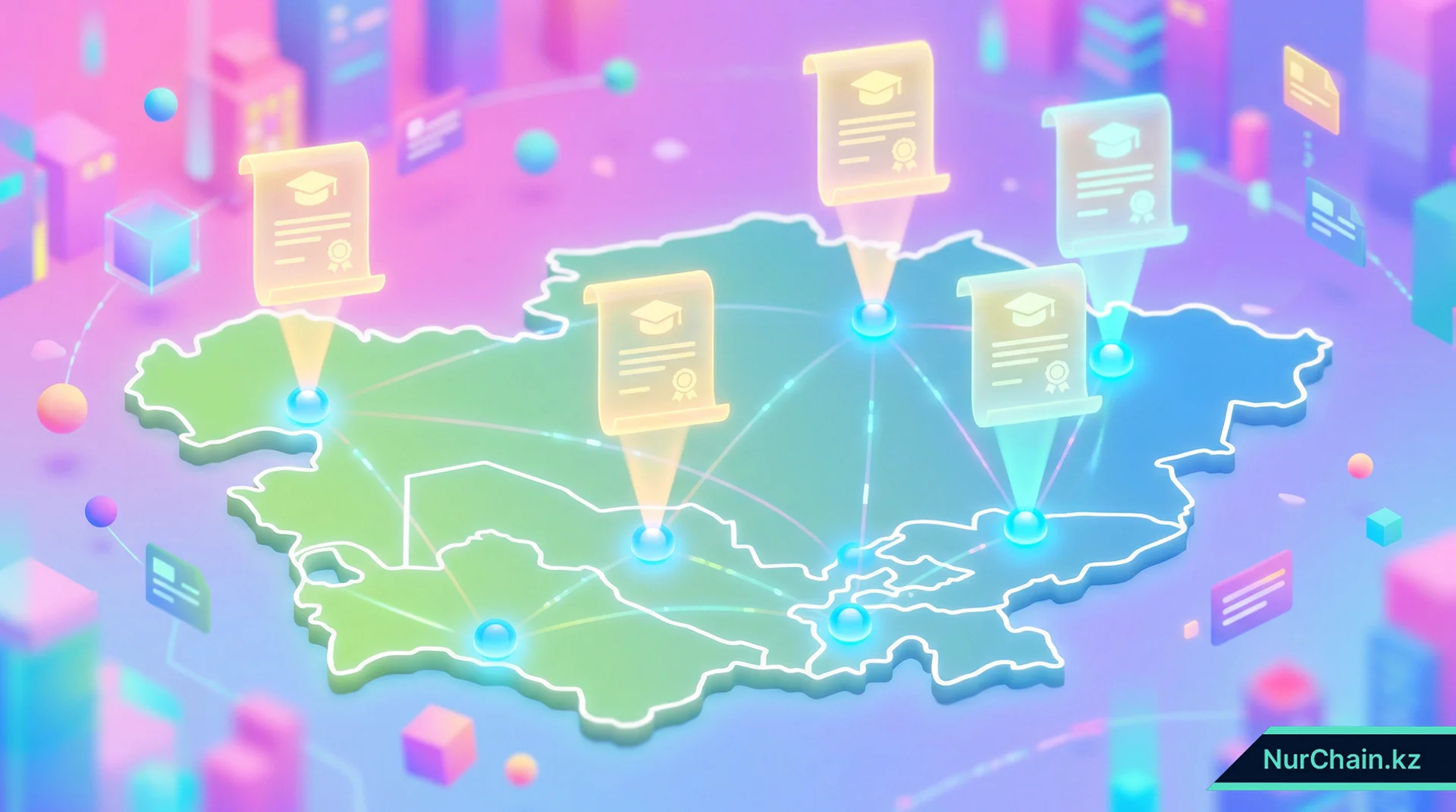
That’s exactly why the shift toward an NFT diploma CIS region framework is such a game-changer. It’s not just tech for tech's sake; it's a strategic response to the challenge of academic fraud . We define that as the deceptive practice of falsifying educational credentials. This new system creates a secure, unchangeable, and instantly verifiable record that tracks your hard-earned achievements perfectly. By using blockchain technology, leading schools ensure your qualifications are as mobile and digital as you are. Here is a look at how pioneering universities like Narxoz and AITU are setting the bar, providing successful case studies of NFT diploma implementations in the region. We’ll also explore Kazakhstan’s role as a digital leader and see how these innovations make it easier than ever to take your career across borders.
🎓 These real-world success stories from Narxoz and AITU provide the practical evidence for the market leaders identified in our Top Rated NFT Diploma Platforms Guide.
Narxoz University: Leading Central Asian Digital Transformation
Which institution has the vision to lead the digital charge across Central Asia? The answer is Narxoz University. By becoming the first higher education institution in the region to issue an NFT diploma CIS region leader, Narxoz didn't just hand out digital certificates; it established a rock-solid regional benchmark, demonstrating how to choose an NFT diploma platform in Kazakhstan based on integrity. This Narxoz University NFT diploma initiative wasn't an accident-it’s a perfect reflection of Kazakhstan’s national strategy for regional IT leadership Kazakhstan has been cultivating for years. Today, the country stands 24th globally in the UN E-Government Survey and sits comfortably within the top 10 for online services . According to a 2023 report by the International Telecommunication Union (ITU), Kazakhstan’s commitment to digital infrastructure has positioned it as a regional leader, facilitating the seamless adoption of Web3 technologies (the decentralized third generation of the internet) in public administration.
This wasn't a solo mission. The project earned the backing of the Narxoz University Business Council and received formal recognition from the Ministry of Digital Development, Innovation and Aerospace Industry of the Republic of Kazakhstan , which has been heavily investing in robust ICT infrastructure (Information and Communication Technology) . For an institution ranked as the #1 private university in Kazakhstan by the Times Higher Education Impact Ranking, this was the logical next step in advancing fraud prevention in education . You might ask, how do NFT diplomas prevent academic fraud? They replace easily forged paper with a secure digital record that no one can replicate or change. Many students wonder, what is the difference between a digital certificate and an NFT diploma? While a standard digital certificate is often just a static PDF that someone can edit, an NFT diploma is a unique asset on a blockchain that belongs exclusively to the graduate.
How does it actually work in plain English? Each digital diploma is tied to a unique smart contract (a self-executing digital agreement stored on a blockchain) . Think of this as a digital seal that's impossible to break, creating an unchangeable record that makes forgery practically impossible. When you consider that the global fraud detection market is expected to hit $61 billion by 2025 with a CAGR (Compound Annual Growth Rate-the average yearly growth rate over a specific period) of 20.3% , you can see why this level of security is such a game-changer. To keep things smooth and legally compliant, the university still provides physical documents printed at the Banknote Factory of the National Bank of the Republic of Kazakhstan . It’s the best of both worlds. The tech behind this is world-class, too, featuring a development team with experience at giants like Amazon, Meta, and Ethereum . What this means is a bright and secure future, backed by the high security ratings of the issuance platform, for the more than 150,000 graduates who now lead companies across the globe.
Why It Matters: By combining the tradition of a physical diploma with the unhackable nature of blockchain, Narxoz is proving that heritage and high-tech can live together to protect a student's hard-earned reputation.

Astana IT University (AITU): Building the Blockchain Ecosystem
While some see blockchain as just a buzzword, Astana IT University blockchain initiatives prove it is a powerful engine for economic growth. Through its specialized "Big Data and Blockchain Technologies" Science and Innovation Center , AITU turns ICT research into real-world tools. They operate in a domestic IT sector that has seen an impressive 16% growth over the last three years , and they aren't slowing down. Their focus on blockchain academic credentials Kazakhstan ensures the nation remains at the forefront of educational technology.
To make sure enough experts exist to run these systems, the university launched a "blockchain developer microqualification" program. This feeds directly into the national goal of training 100,000 IT specialists every year. AITU isn't just issuing certificates; they are building a "Smart City" digital ecosystem, often weighing the benefits of SaaS vs custom blockchain for diplomas to find the best fit for their scale. Their work is part of a larger success story, contributing to a total economic effect of 51.3 billion tenge ($95.1 million) generated by recent digital initiatives in Kazakhstan.
The university’s "Digital Generation" initiative acts as a testing ground. Global benchmarks suggest these blockchain verification systems can speed up public service delivery by up to 20-fold . Imagine getting your credentials verified in minutes instead of weeks! That's the power of this tech. Graduates use a digital wallet for graduates to store these micro-credentials, benefiting from white label NFT diploma platforms that maintain the university's branding. This makes them instantly hirable within the Astana Hub ecosystem . If you're curious about the mechanics, you might ask: how does a smart contract verify a university degree? To understand the value, many institutions first look at a detailed review of global NFT credential platforms. It works by automatically cross-referencing your unique token with the university's official blockchain address. For those looking to study in the region, it's helpful to know which universities in Kazakhstan issue blockchain diplomas so you can ensure the latest tech protects your hard work, while also considering NFT diploma platform pricing models for long-term sustainability. "The integration of blockchain into academic credentials is a critical step toward a transparent labor market," notes a recent study by the World Economic Forum on the Future of Jobs. That study emphasizes that verifiable digital skills are becoming the new currency for global employers. This hub is a powerhouse, currently hosting over 1,700 participant companies and exporting a massive $481.5 million in tech services in 2024.
Quick Insight: AITU does more than teach; they create a talent pipeline where nearly 2,000 companies can instantly verify your skills, cutting out the middleman and the paperwork.

Regional Pilots and the CIS Digital Development Framework
The momentum for digital diplomas is spreading far beyond a few isolated campuses as part of the Kazakhstan digital transformation 2026 roadmap. At the ITU Regional Development Forum (RDF-CIS) held in Astana in March 2024, leaders named blockchain credentials a top priority. Their focus for 2023–2025 is crystal clear: cybersecurity and personal data protection must lead the way.
Kazakhstan is effectively becoming the digital heart of the region. With projects like the Caspian Sea fiber-optic cable and a population boasting a 92% digital literacy rate, the infrastructure is ready for cross-border verification. People often ask, how does Kazakhstan lead the CIS in digital government services? A major factor is the technical ease of integrating NFT diplomas with Platonus and Univer systems. The answer lies in their early adoption of Web3 technology in public administration and their consistently high scores in the UN E-Government Survey. Meanwhile, in Russia, the Masterchain platform Russia -which is officially certified by the Federal Security Service (FSB) for its cryptographic strength-is providing the foundation for secure records. This mirrors a global trend, as the digital signature market is set to reach $38.16 billion by 2030 .
The CIS Digital Development Committee is now working to synchronize standards for blockchain in higher education CIS programs, ensuring that you know how to avoid vendor lock-in as you adopt these technologies. They are tapping into a global management market for digital credentials valued at $1.8 billion in 2024 , which is growing at a CAGR (Compound Annual Growth Rate) of 13.8% . The data shows that these programs work. Just look at the budget: automation will save millions, and the Kazakh government has already reported 13 billion tenge ($24.1 million) in savings thanks to these digital shifts.
Takeaway: This isn't just about one school or one country; it's a coordinated regional movement. As standards become unified, a digital diploma from one CIS country will be easily recognized and trusted by another, simplifying life for everyone.

Impact on Academic Integrity and Global Mobility in the CIS
Why are we seeing this massive digital diploma implementation shift right now? Because the cost of "fake news" in the academic world is simply too high. Recently, global losses related to e-commerce and credential fraud hit $41 billion. In response, the 99.9% protection rate offered by cryptographic authentication (the process of proving an identity using mathematical codes) isn't just a luxury-it's a necessity. Research from the Gartner Group indicates that by 2026, 30% of enterprises will use blockchain-based identity and credentialing to mitigate fraud, reflecting a shift toward decentralized trust models in the global workforce.
These NFT diplomas are designed to be "self-sovereign," utilizing self-sovereign identity (SSI) principles. In simple terms, this means you, the graduate, own your data. As the market for digital badges grows at a compound annual growth rate of 16.9% through 2030, having total control over your achievements is vital. By following the verifiable credentials W3C standard , these regional diplomas are gaining respect and recognition in the USA, Europe, and China. This ensures record immutability and data sovereignty, which is a huge win for a country that already exports IT services to over 86 countries.
The best part? This transition kills the need for slow, expensive notarization processes. Because smart contracts for academic integrity prove authenticity, you don't need a stamp and a signature to prove you graduated. This makes cross-border credential verification seamless. You might wonder, what are the benefits of NFT diplomas for global mobility? They allow you to share your credentials instantly with anyone in the world. However, many ask, is an NFT diploma legally recognized in the CIS? Absolutely-governments are rapidly updating laws to ensure these digital records have the same legal weight as paper. With internet access now covering 93% of the population in the CIS, and institutions climbing the Times Higher Education Impact Ranking , the path is clear for a future where academic histories are 100% digital, completely tamper-proof, and move at the speed of light.
Did You Know?: A blockchain-verified diploma removes the "geography tax." Whether you are applying for a job in London, New York, or Seoul, your NFT diploma provides the same instant, ironclad proof of your skills without any extra paperwork.

Summary: Securing the Future of Education through Blockchain Innovation
What’s the big takeaway here? The digital landscape of higher education across the CIS is undergoing a massive transformation. We’re finally moving away from those vulnerable paper records and heading toward a future built on transparency and trust.
Leading the charge are trailblazing institutions like Narxoz University . They were actually the first in the region to issue an NFT diploma -a non-fungible token representing a digital academic certificate. This isn't just a flashy update; it’s a critical tool for fraud prevention in education . Think of it this way: by using unique smart contracts (self-executing digital agreements stored on a blockchain), these diplomas act like a tamper-proof seal. They make forgery almost impossible. This doesn't just protect the student; it guards the reputation of the entire institution. Plus, this movement fits perfectly with Kazakhstan's goal of regional IT leadership. Thanks to a solid ICT infrastructure, the country already ranks among the global elite for its high-quality e-government services.
We’re also seeing this momentum build at Astana IT University (AITU) . They are busy creating a full blockchain ecosystem. Their focus on blockchain academic credentials and microqualifications means skills can be verified in an instant. Why does this matter? It slashes the time it takes for public services to do their job and lets graduates use a digital wallet to share proof of expertise immediately. This software-based system securely stores your digital assets for thousands of employers to see. When you add it all up, these efforts have a huge economic impact. They save millions in paperwork and turn the region into a hub for Web3 innovation.
Ultimately, pushing for NFT diploma implementation is about more than just security; it’s about global mobility. By sticking to the verifiable credentials W3C standard , these records ensure record immutability (a technical specification for making digital credentials cryptographically secure). It also protects data sovereignty, which means you keep control over your own digital data. In plain English? Your degree is respected whether you're in New York or Seoul. This transition basically gets rid of the "geography tax" by removing the need for slow, pricey notarization processes. Now, your achievements can finally move at the speed of light, even if institutions choose to use open source tools for issuing NFT diplomas to maintain full control. As the CIS syncs up its digital standards, the result is a secure labor market where your hard work is backed by the best tech available.
➡️ Ready to apply this? Knowing that the technology works is only the first half of the equation. Now, learn the technical requirements for your institution by exploring How to Choose an NFT Diploma Platform in Kazakhstan.
