Batch Verification of NFT Diplomas for Mass Hiring Campaigns
 Author:
 Reading time:
13 min
Reading time:
13 min
 Difficulty:
Easy
Difficulty:
Easy
- How Does Batch Verification Accelerate High-Volume Recruitment?
- Which Tools Enable Simultaneous Verification of NFT Diplomas?
- Why Is Batch Verification Critical for Eliminating Resume Fraud at Scale?
- Best Practices for Implementing Mass NFT Verification
- Summary: Slashing Costs and Securing Talent with Automated Verification
Have you ever faced the daunting, high-pressure task of scaling a team by hundreds? It’s tough when you're doing this in a single month. You likely find yourself drowning in a vast sea of unverified PDFs and manual background checks. This frustration is both common and completely legitimate. We've all felt that sinking feeling when administrative bottlenecks turn your hiring spree into a crawl. These bottlenecks are simply points of congestion that slow your process down. Traditional recruitment simply isn't built for today's fast-paced business world. It often overlooks the benefits of digital credential verification. This is especially true when you consider the rising costs of manual data entry. To make matters worse, it takes 44 days on average to fill a single role.
Batch verification of NFT diplomas is the strategic answer to this specific challenge. In simple terms, this means checking multiple digital certificates at the same time. It is designed to provide high-volume recruitment automation . This technology streamlines the hiring process for many candidates at once. It works by processing thousands of credentials in mere seconds, as shown in how to verify an nft diploma in under 30 seconds. This represents a fundamental, game-changing shift. It doesn't just save you time. It actually secures your talent pipeline against increasingly sophisticated deception. This article explores the tools that make simultaneous verification possible. We'll also explain how blockchain fundamentally eliminates resume fraud at scale. This addresses the common concern: can nft diplomas be faked? Resume fraud is the act of falsifying academic or professional achievements. We will also share essential best practices informed by case studies of companies using digital verification. These will help you integrate these tamper-proof credentials into your current workflow. These are records that no one can illegally alter. That way, you can get back to what matters most. For you, that's finding the right people for your organization.
🏗️ Mastering the efficiency of batch processing is a critical operational pillar within the broader framework of the Employers Guide to Verifying NFT Diplomas in Kazakhstan.
How Does Batch Verification Accelerate High-Volume Recruitment?
Have you ever managed a high-intensity hiring spree and needed to bring on hundreds of new team members at once? If so, you know that heavy, sinking feeling of being buried under a mountain of manual paperwork. Traditional verification usually creates the biggest bottleneck when you recruit at scale. Research by EY in 2025 highlights how much this inefficiency-a lack of productivity or wasted effort-hurts the bottom line: a single manual HR data entry task now costs an average of $4.86, while the cost of searching for employee info manually has climbed to $11.75 per instance. A 2024 study by the Society for Human Resource Management (SHRM) backs this up, showing that administrative logjams (delays caused by an overload of paperwork or procedures) in high-volume sectors can hike up the cost-per-hire (the total cost associated with hiring a new employee) by as much as 30% because those job openings stay vacant for far too long. When you try to maximize mass hiring campaign efficiency , every minute counts. You might ask, " how does batch verification accelerate mass hiring? " The process begins by removing the friction points that usually grind your operations to a halt.
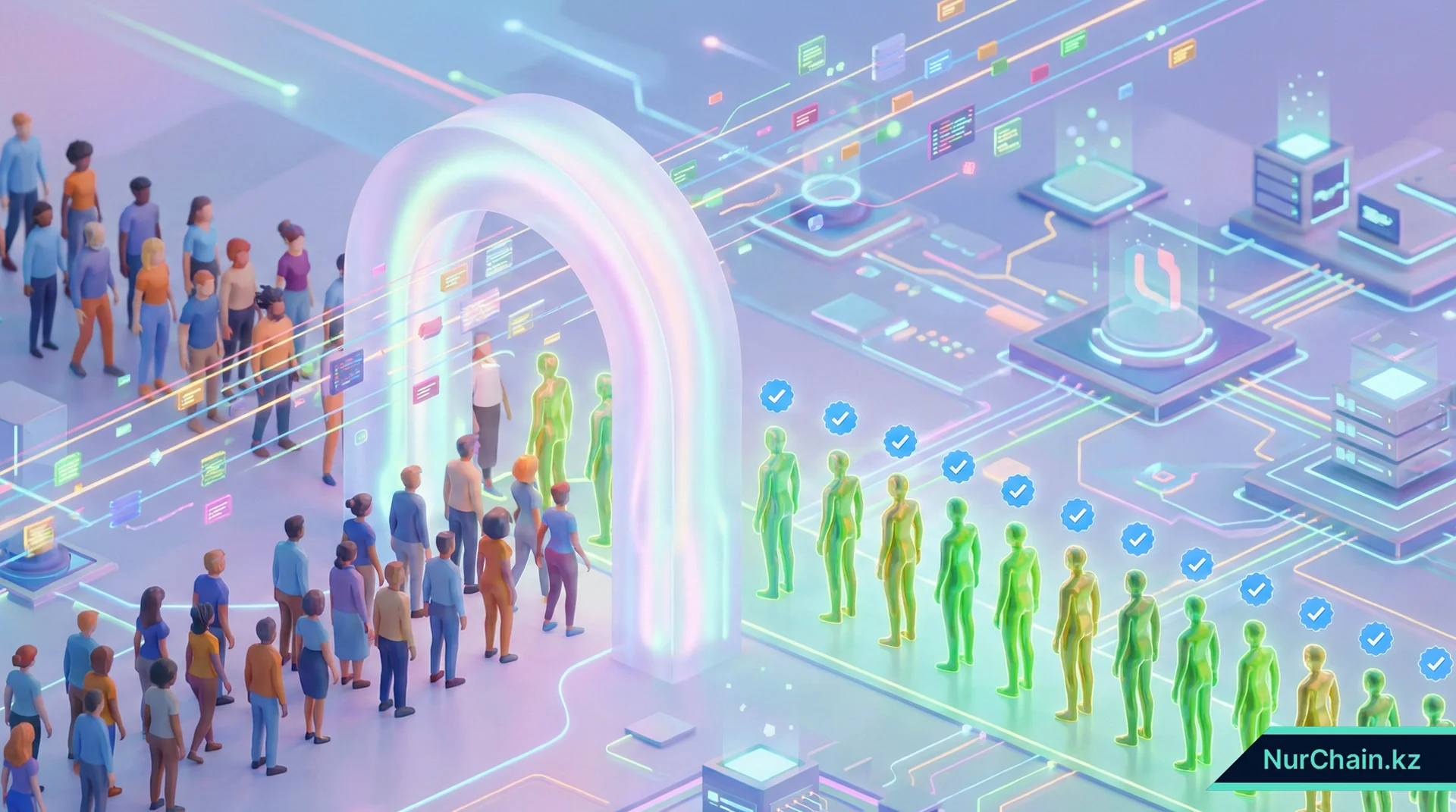
This is exactly where batch verification technology steps in to change the game. It allows your team to process hundreds or even thousands of credentials simultaneously. Think about the impact: while the global average hiring time currently sits at 44 days, blockchain-based systems (digital ledgers that record data across many computers so it cannot be changed) can transform weeks of waiting into a process that takes mere seconds. This hiring time reduction with blockchain isn't just a luxury; it’s a necessity for companies looking for true high-volume recruitment automation . In fact, organizations that have made the switch have seen their hiring time drop by up to 75% and their administrative HR costs slashed by up to 80%.
Why is it so much faster? It's all about the tech under the hood. High-performance blockchain protocols-especially those using Proof of Stake (a consensus mechanism where block creators are chosen based on the number of coins they hold)-confirm transactions in about 5 seconds. Compare that to the 20-second minimum for even the best traditional digital checks, and the difference is clear. For businesses, this translates to a 47% boost in operational efficiency (the ability to deliver products or services using the least amount of resources). Instead of wasting your recruitment team’s time on manual document checking-which costs companies an estimated $17.54 per timecard verification-you can finally let them focus on what really matters: finding the right cultural fit for your company. When we talk about blockchain credential verification for recruitment , we are looking at a fundamental shift-a topic often explored in blockchain FAQs for HR directors-in cost-per-hire optimization. Many managers wonder, "what is the cost saving of automated diploma verification?"-and the answer lies in the massive reduction of labor hours spent on manual outreach. This shift allows for the seamless batch verification of NFT diplomas, turning a logistical nightmare into a streamlined workflow.
Quick Insight: Efficiency isn't just about speed; it's about reclaiming lost capital. Every dollar you save on manual verification is a dollar you can reinvest into growing your people and keeping your best talent.

Which Tools Enable Simultaneous Verification of NFT Diplomas?
Look into Digital Credential Management (DCM) platforms to get started with issuing and tracking digital certificates. Tools like Sertifier and BCdiploma lead the way right now. BCdiploma successfully managed a batch issuance of 14,000 diplomas for Sciences Po Bordeaux, reaching a massive 94% activation rate. These platforms offer "one-click" batch verification features that make checking candidate DIDs-unique digital identities that don't need a central authority-incredibly simple. This is the power of verifiable credentials in HR tech; they allow you to verify a trustless exchange of info instantly. According to HolonIQ, the digital credential market is exploding because schools and companies want solutions that "talk" to each other via the 1EdTech Open Badges standard to ensure everything works across platforms.
Unified verifier portals are the best choice for larger enterprises. You can host a branded interface that connects directly with major ecosystems like Ethereum, Polygon, or Solana . Solana currently attracts 22% of new developers, making it a very solid choice for high-speed validation. These portals validate multiple digital signatures all at once and plug right into your existing ATS. It’s a smart move, especially since the global digital identity market is on track to reach $46.78 billion by 2025. But the real question is, "what tools allow simultaneous verification of NFT diplomas?" Most modern NFT diploma verification tools act as a bridge between the blockchain ledger and your internal databases. If you're wondering how to integrate nft diploma verification into hr ats systems, most providers now offer simple API connections that make integration smooth.
We’re also seeing high-tech Zero-Knowledge Proof (zk-SNARKs) verifiers that prove information without revealing the actual data. Forward-thinking governments like Estonia are already testing these for their secure ID systems. What this means for you is that your HR team can verify a candidate’s degree without ever needing to see sensitive personal data, thanks to granular privacy controls for nft diplomas. It’s privacy-first verification. This works alongside new tech like KTP-ECDSA, which keeps everything running light and fast. As the digital badge market grows at a rate of 17.6% through 2032, these tools will become standard equipment for any modern HR department. This level of digital signature authentication ensures that no record is compromised during the process. When you consider the benefits of blockchain for HR departments, the primary gains are security and the ability to process data at an unprecedented scale. Using decentralized identifiers (DIDs) for HR helps you maintain a privacy-compliant ecosystem.
Did You Know? The shift toward batch verification isn't just about speed; it's about building a "trust-by-design" system that keeps up with the massive growth of the digital identity world.

Why Is Batch Verification Critical for Eliminating Resume Fraud at Scale?
Resume fraud is the kind of systemic risk that keeps hiring managers up at night. Data from 2024 shows a sobering reality: 6 in 10 resume fraudsters actually managed to land job offers. It’s only getting tougher; Gartner predicts that by 2028, AI-generated deception will make 1 in 4 candidate profiles fake. You need a system that doesn't blink to implement resume fraud prevention at scale . You might wonder, "Are NFT diplomas more secure than traditional degrees?" The answer is a resounding yes, because they rely on cryptographic hashing rather than easily forged paper or edited PDFs. How do you fight back against that kind of scale? As a 2025 Deloitte report on talent security points out, the rise of AI-generated fake identities means you must stop just "trusting" PDFs and start "verifying" digital fingerprints on a secure ledger.
When you move to an NFT-based system, your company’s qualifications become immutable , meaning no one can alter or fake them. You store a unique "hash" of the diploma on a distributed ledger, creating a single source of truth for your data. This directly addresses a global fraud prevention market valued at $61.01 billion in 2025. In fact, networks using blockchain have seen dispute rates drop from 5% to under 1%, effectively cutting out expensive middlemen and third-party background check agencies.
You'll feel the impact of this security immediately. Within the first year of implementation, companies reported reducing hiring fraud cases by over 30%. This provides a powerful shield against the 42% of fraudulent applicants who admit to lying on every single resume they send out. Batch verification is a total lifesaver for international hiring, especially when verifying international nft degrees. It gives you a globally accessible, tamper-proof record, so you no longer have to worry about slow notarization as the world moves toward blockchain vs apostille for document legalization. This is how you move toward automated background checks that actually work. If you want to know how to eliminate resume fraud in high-volume recruitment, the key is creating immutable digital records that serve as tamper-proof credentials.
Why It Matters: When you eliminate fraud, you aren't just protecting your company from a bad hire; you are protecting your team's hard work and the real value of the credentials you issue.

Best Practices for Implementing Mass NFT Verification
How do you start? Your first priority is to automate your collection process . Ask candidates for their Decentralized Identifier (DID) or a public verification link the moment they apply. This simple change triggers automated checks that slash your verification time to just 4 seconds per person. By embracing self-sovereign identity (SSI), you give candidates control over their data while streamlining your own automated background checks .
Your tools must communicate effectively with other systems. Make sure your tech supports global standards like W3C Verifiable Credentials and OpenBadges 3.0. High-impact digital credential management (DCM) thrives on interoperability (W3C standards) to ensure your system doesn't become a silo. This isn't just a technical detail; it's how you stay compliant with GDPR and CCPA privacy laws. Once your system is live, use your dashboard to see how people engage with their credentials. Current benchmarks show that digital certificates get shared on LinkedIn about 40–45% of the time-a perfect way to boost your brand’s reach for free.
Don't overlook security and strategic planning. Use tiered access to ensure only authorized staff can run these mass checks. This is critical, as 81% of industry pros believe the responsibility for accuracy falls squarely on the hiring manager. To maximize your time, integrate these verified results into AI-driven screening tools . Since 55% of HR pros already use AI, pairing it with tamper-proof blockchain data ensures your top-ranked candidates are exactly who they say they are.
The Takeaway: Moving to batch verification is more than a technical fix; it’s a strategic shift that protects your reputation and ensures your talent pipeline stands on a foundation of total integrity.

Summary: Slashing Costs and Securing Talent with Automated Verification
Moving toward batch verification represents a massive shift in how you manage human capital. It’s a vital change for the modern age. You live in a digital-first world. That’s why you need to move away from manual verification. These manual tasks cost you about $17.54 every single time on average. Embrace blockchain-based systems and your organization can slash administrative HR costs by up to 80%. There’s another huge benefit too: you can reduce hiring times by a staggering 75% compared to old methods.
This efficiency is a true game-changer. It transforms recruitment from a reactive bottleneck into a proactive competitive advantage. It frees your team to focus on cultural fit rather than tedious paper-shuffling. Digital Credential Management (DCM) platforms sit at the center of this transformation. These software systems issue and track digital achievements. You'll use high-speed protocols like Solana to allow for the "one-click" validation of thousands of credentials simultaneously.
Think of this technology as your ultimate shield. It protects you against the rising tide of resume fraud and AI-generated deception. That includes fake credentials created by artificial intelligence. You can rest easy by relying on immutable digital records . This is data that remains permanently fixed and unchangeable. You can also rely on cryptographic hashing-the mathematical process that secures and verifies data integrity. By doing this, you'll know the qualifications you review are 100% authentic. In fact, this approach can reduce hiring fraud cases by over 30% quickly. This happens in just the first year. Perhaps you use Zero-Knowledge Proofs for privacy-compliant checks to prove a statement is true without revealing extra info. Or maybe you integrate decentralized identifiers (DIDs)-unique, self-owned digital identities-into your Applicant Tracking System (ATS). Either way, the goal is a "trust-by-design" ecosystem. Just make sure you follow best practices by adhering to W3C standards, the internationally recognized rules for the web. By doing so, you aren't just speeding up your hiring; you're building a recruitment pipeline grounded in absolute integrity and trust.
🚀 Ready to automate? Now that you understand the theory of high-volume verification, the next step is technical implementation. Learn How to Integrate NFT Diploma Verification into HR ATS Systems to make this speed a permanent part of your recruitment workflow.
